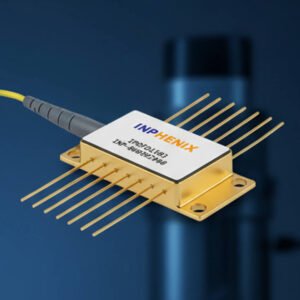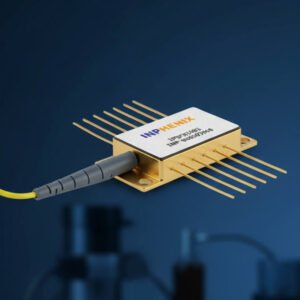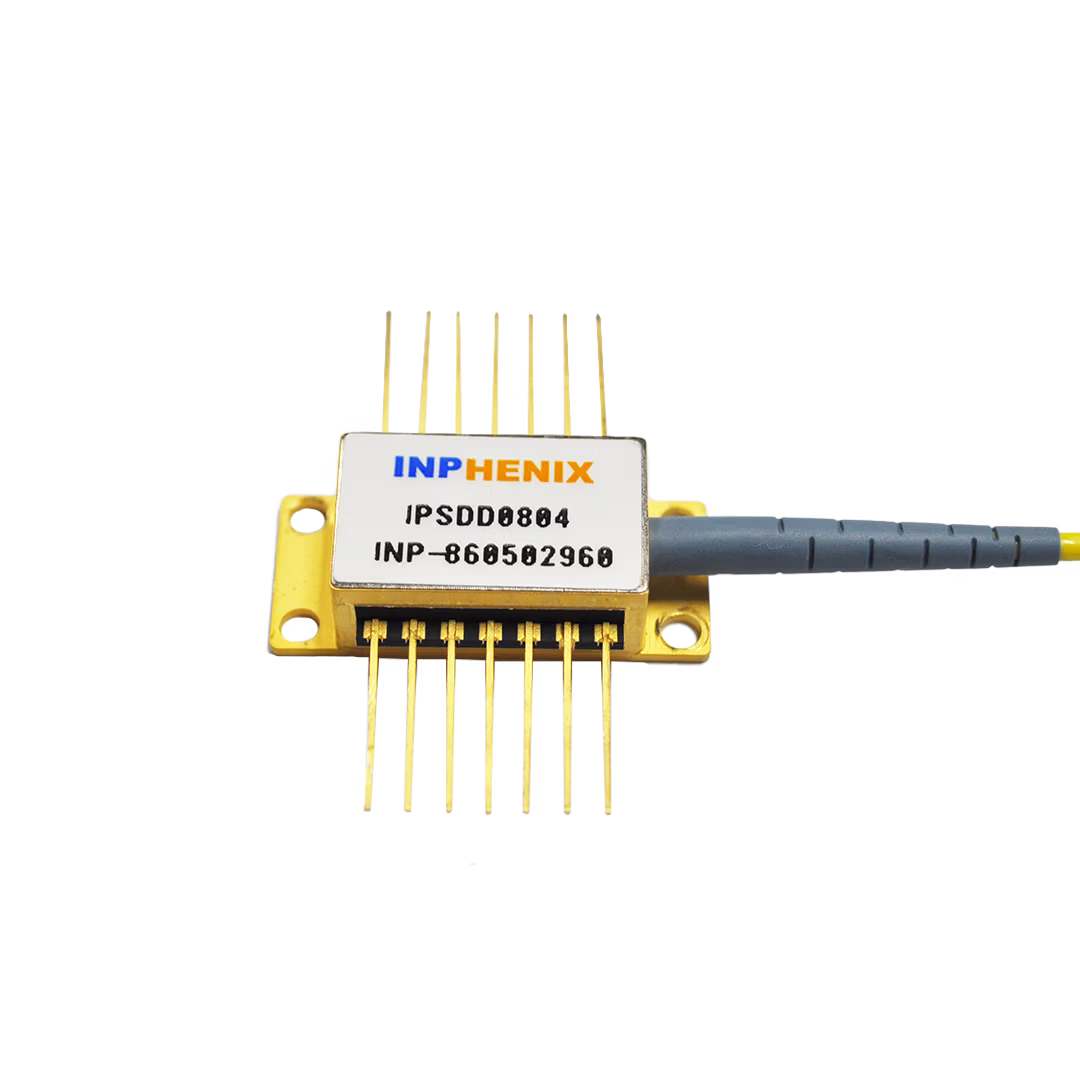
Superluminescent Diodes (SLDs or Superluminescent Light Emitting Diodes (SLEDs)) are optoelectronic semiconductor devices that emit broadband optical radiation based on superluminescence. In terms of construction, they are similar to laser diodes, containing an electrically driven p–n junction and an optical waveguide, but Superluminescent Diode intentionally lack optical feedback, so that no laser action can occur. Optical feedback, which could lead to the formation of resonator modes and thus to pronounced structures in the optical spectrum and/or to spectral narrowing, is suppressed by means of tilting the facets relative to the waveguide, and can be suppressed further with anti-reflection coatings.
Essentially, a Superluminescent Diode is a semiconductor optical amplifier with no input signal, where weak spontaneous emission into the waveguide mode is followed by strong laser amplification (therefore, this is called “amplified spontaneous emission (ASE)”).
Superluminescent Diodes are applied in situations where a smooth and broadband optical spectrum (i.e. low temporal coherence), combined with high spatial coherence and relatively high intensity, is required.
Center Wavelength(nm) To:From: | Typical 3dB Bandwidth(nm) To:From: | Typical Output Power(mW) To:From: | Typical Ripple(dB) | Typical Current To:From: | Package Type | Part Number |
|---|---|---|---|---|---|---|
| Center Wavelength(nm) | Typical 3dB Bandwidth(nm) | Typical Output Power(mW) | Typical Ripple(dB) | Typical Current | Package Type | Part Number |
| 750 | 10 | 3 | 0.1 | 120 | BUT or DIL | IPSDD0701 |
| 750 | 14 | 10 | 0.1 | 120 | TO 8, 9 or 56 Ex-Window | IPSDT0701 |
| 770 | 13 | 8 | 0.1 | 180 | BUT or DIL | IPSDD0705 |
| 770 | 20 | 5 | 0.1 | 140 | BUT or DIL | IPSDD0706 |
| 780 | 12 | 3 | 0.1 | 150 | BUT or DIL | IPSDD0702 |
| 780 | 12 | 10 | 0.1 | 180 | BUT or DIL | IPSDD0707 |
| 780 | 40 | 5 | 0.1 | 200 | BUT or DIL | IPSDD0708 |
| 800 | 10 | 15 | 0.1 | 200 | BUT or DIL | IPSDD0809 |
| 800 | 40 | 5 | 0.1 | 200 | BUT or DIL | IPSDD0810 |
| 820 | 15 | 0.3 | 0.1 | 120 | BUT or DIL | IPSDD0801 |
| 820 | 15 | 5 | 0.1 | 120 | TO 8, 9 or 56 Ex-Window | IPSDT0801 |
| 820 | 15 | 8 | 0.1 | 140 | TO 8, 9 or 56 Ex-Window | IPSDT0802 |
| 820 | 25 | 2.5 | 0.1 | 140 | BUT or DIL | IPSDD0802 |
| 820 | 25 | 8 | 0.1 | 140 | TO 8, 9 or 56 Ex-Window | IPSDT0803 |
| 820 | 40 | 5 | 0.1 | 180 | BUT or DIL | IPSDD0803 |
| 820 | 85 | 7.5 | 0.15 | 600 | BUT | IPSDD0811 |
| 830 | 30 | 15 | 0.2 | 200 | BUT or DIL | IPSDD0820 |
| 830 | 32 | 45 | 0.1 | 250 | TO 8, 9 or 56 Ex-Window | IPSDT0804 |
| 830 | 40 | 7 | 0.1 | 200 | BUT or DIL | IPSDD0812 |
| 830 | 40 | 10 | 0.1 | 150 | TO 8, 9 or 56 Ex-Window | IPSDT0805 |
| 830 | 50 | 5 | 0.1 | 150 | BUT or DIL | IPSDD0813 |
| 830 | 150 | 12 | 0.15 | 600 | BUT | IPSDD0814 |
| 840 | 35 | 5 | 0.1 | 160 | BUT or DIL | IPSDD0804 |
| 840 | 45 | 8 | 0.1 | 200 | BUT or DIL | IPSDD0807 |
| 840 | 45 | 11 | 0.1 | 250 | BUT or DIL | IPSDD0808 |
| 840 | 50 | 8 | 0.1 | 200 | BUT or DIL | IPSDD0823 |
| 840 | 75 | 10 | 0.15 | 600 | BUT | IPSDD08XX |
| 850 | 50 | 8 | 0.1 | 200 | BUT or DIL | IPSDD0815 |
| 850 | 130 | 12 | 0.15 | 600 | BUT | IPSDD08XX |
| 870 | 50 | 6 | 0.1 | 180 | BUT or DIL | IPSDD0816 |
| 870 | 90 | 10 | 0.15 | 600 | BUT | IPSDD08XX |
| 880 | 45 | 6 | 0.1 | 200 | BUT or DIL | IPSDD0805 |
| 880 | 40 | 2 | 0.1 | 180 | BUT or DIL | IPSDD0806 |
| 880 | 45 | 8 | 0.1 | 180 | BUT or DIL | IPSDD0819 |
| 880 | 55 | 5 | 0.1 | 180 | BUT or DIL | IPSDD0817 |
| 900 | 15 | 20 | 0.2 | 200 | BUT or DIL | IPSDD0902 |
| 900 | 15 | 35 | 0.2 | 200 | TO 8 or 9 Ex-Window | IPSDT0901 |
| 900 | 30 | 10 | 0.1 | 200 | TO 8 or 9 Ex-Window | IPSDT0902 |
| 900 | 45 | 7 | 0.1 | 200 | BUT or DIL | IPSDD0903 |
| 920 | 30 | 3 | 0.1 | 150 | BUT or DIL | IPSDD0901 |
| 920 | 55 | 8 | 0.1 | 200 | BUT or DIL | IPSDD0904 |
| 920 | 90 | 5 | 0.1 | 200 | BUT or DIL | IPSDD0905 |
| 980 | 25 | 5 | 0.1 | 250 | BUT or DIL | IPSDD0906 |
| 1020 | 100 | 10 | 0.15 | 250 | BUT or DIL | IPSDD1001 |
| 1020 | 60 | 7 | 0.1 | 150 | BUT or DIL | IPSDD1005 |
| 1020 | 110 | 8 | 0.1 | 300 | BUT or DIL | IPSDD1006 |
| 1040 | 55 | 30 | 0.2 | 400 | BUT or DIL | IPSDD1007 |
| 1040 | 70 | 10 | 0.1 | 250 | BUT or DIL | IPSDD1002 |
| 1050 | 45 | 35 | 0.2 | 400 | BUT or DIL | IPSDD1008 |
| 1050 | 55 | 15 | 0.1 | 300 | BUT or DIL | IPSDD1009 |
| 1050 | 55 | 30 | 0.1 | 400 | BUT or DIL | IPSDD1003 |
| 1070 | 60 | 5 | 0.1 | 500 | BUT or DIL | IPSDD1010 |
| 1070 | 60 | 10 | 0.15 | 400 | BUT or DIL | IPSDD1004 |
| 1280 | 55 | 10 | 0.5 | 350 | BUT or DIL | IPSDD1201 |
| 1280 | 70 | 5 | 0.15 | 300 | BUT or DIL | IPSDD1202 |
| 1280 | 95 | 10 | 0.5 | 500 | BUT or DIL | IPSDD1203 |
| 1310 | 40 | 1.5 | 0.1 | 120 | TO 8, 9 or 56 Ex-Window | IPSDT1301 |
| 1310 | 40 | 0.5 | 0.1 | 120 | TO 56 pigtail Ex-Fiber | IPSDT1303 |
| 1310 | 40 | 5 | 0.1 | 150 | TO 8, 9 or 56 Ex-Window | IPSDT1302 |
| 1310 | 40 | 35 | 1 | 400 | BUT or DIL | IPSDD1305 |
| 1310 | 45 | 1 | 0.1 | 120 | BUT or DIL | IPSDD1301 |
| 1310 | 45 | 20 | 1 | 350 | BUT or DIL | IPSDD1302 |
| 1310 | 45 | 25 | 1 | 350 | BUT or DIL | IPSDD1309 |
| 1310 | 50 | 15 | 0.2 | 150 | TO 8, 9 or 56 Ex-Window | IPSDT1310 |
| 1310 | 55 | 7 | 0.5 | 300 | BUT or DIL | IPSDD1303 |
| 1310 | 55 | 20 | 1 | 450 | BUT or DIL | IPSDD1304 |
| 1310 | 55 | 25 | 1 | 350 | BUT or DIL | IPSDD1311 |
| 1310 | 70 | 18 | 1 | 500 | BUT or DIL | IPSDD1306 |
| 1310 | 65 | 15 | 1 | 250 | BUT or DIL | IPSDD1312 |
| 1310 | 80 | 15 | 1 | 450 | BUT or DIL | IPSDD1307 |
| 1310 | 90 | 10 | 1 | 350 | BUT or DIL | IPSDD1313 |
| 1310 | 100 | 3 | 0.1 | 180 | BUT or DIL | IPSDD1308 |
| 1410 | 50 | 10 | 1 | 300 | BUT or DIL | IPSDD1401 |
| 1410 | 60 | 15 | 1 | 450 | BUT or DIL | IPSDD1402 |
| 1410 | 70 | 10 | 1 | 550 | BUT or DIL | IPSDD1403 |
| 1490 | 50 | 5 | 0.5 | 200 | BUT or DIL | IPSDD1404 |
| 1490 | 65 | 18 | 1 | 500 | BUT or DIL | IPSDD1405 |
| 1520 | 50 | 15 | 0.15 | 400 | BUT or DIL | IPSDD1505 |
| 1520 | 75 | 10 | 1 | 350 | BUT or DIL | IPSDD1506 |
| 1550 | 40 | 0.2 | 0.15 | 120 | TO 56 pigtail Ex-Fiber | IPSDT1501 |
| 1550 | 55 | 0.5 | 0.1 | 120 | BUT or DIL | IPSDD1501 |
| 1550 | 55 | 5 | 0.2 | 200 | BUT or DIL | IPSDD1502 |
| 1550 | 60 | 3 | 0.2 | 300 | BUT or DIL | IPSDD1503 |
| 1550 | 50 | 3 | 0.2 | 150 | TO 8, 9 or 56 Ex-Window | IPSDT1502 |
| 1550 | 60 | 10 | 1 | 300 | BUT or DIL | IPSDD1504 |
| 1550 | 65 | 12 | 0.15 | 300 | BUT or DIL | IPSDD1507 |
| 1550 | 65 | 20 | 0.4 | 450 | BUT or DIL | IPSDD1508 |
| 1550 | 90 | 8 | 1 | 300 | BUT or DIL | IPSDD1509 |
| 1580 | 60 | 5 | 0.2 | 300 | BUT or DIL | IPSDD1510 |
| 1580 | 75 | 5 | 0.4 | 300 | BUT or DIL | IPSDD1511 |
| 1610 | 55 | 2 | 0.1 | 250 | BUT or DIL | IPSDD1601 |
| 1610 | 65 | 5 | 0.5 | 250 | BUT or DIL | IPSDD1602 |
| 1640 | 40 | 5 | 0.5 | 400 | BUT or DIL | IPSDD1603 |
| 1640 | 50 | 3 | 0.5 | 200 | BUT or DIL | IPSDD1604 |
Applications of Superluminescent Diode:SLDs have been used for many different applications. The major application fields are(1) Optical Coherence Tomography
(2) White light interferometry
(3) Fiber-optic link testing
(4) WDM PON systems
(5) Fiber-optic sensors
(6) Fiber-optic gyroscopesThe actual applications in each field are summarized in Table 1. More details are described in the following sections.
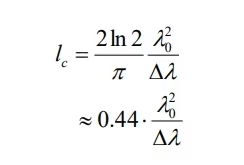
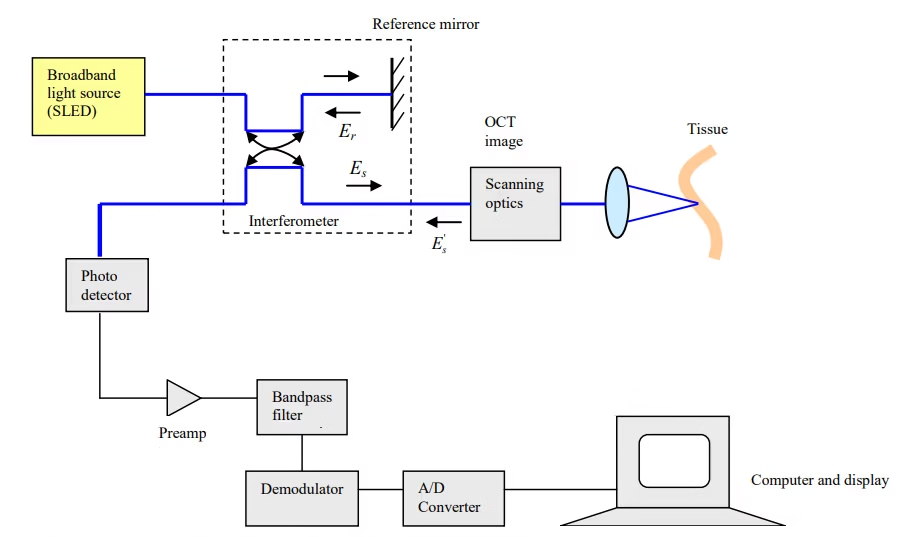
Used across various fields for imaging and measurement, superluminescent diode (SLD) devices emit broadband optical radiation, ensuring high spatial coherence. Key to imaging technologies, superluminescent diodes (SLDs) deliver broadband optical emission for industries such as OCT and fiber optic sensing. Used in both diagnostic and imaging applications, the versatile superluminescent diodes (SLDs) contribute to precise fiber optic sensor measurements.Optical technologies use superluminescent diode(SLD) in applications that require smooth and broad spectra crucial in OCT, fiber-optic testing, and WDM PON systems applications too.Optical Coherence Tomography (OCT) Applications :Optical coherence tomography (OCT) is an optical signal acquisition and processing method using an interferometric technique to capture micrometer-resolution, three-dimensional images from within optical scattering media such as biological tissue. Superluminescent diodes (SLDs) have been used as a broad-band spectrum light source. Very wide-spectrum emitting over a ~145nm wavelength range has achieved sub-micrometer resolution. Optical coherence tomography typically employs near-infrared light. The use of relatively long wavelength light allows it to penetrate into the scattering medium.Commercially available optical coherence tomography systems are employed in diverse applications, including art conservation and diagnostic medicine, notably in ophthalmology where it can be used to obtain detailed images from within the retina. Recently it has also begun to be used in interventional cardiology to help diagnose coronary artery disease.There are two types of OCT: (1) Time-domain OCT, and (2) Frequency-domain OCT.(a) Time-domain OCT :The basic configuration of time–domain OCT system is shown in Fig. 1 [1]. Light in an OCT system is broken into two arms—a sample arm (containing the item of interest) and a reference arm (usually a mirror). The combination of reflected light from the sample arm and reference light from the reference arm gives rise to an interference pattern, but only if light from both arms has travelled the “same” optical distance (“same” meaning a difference of less than a coherence length). By scanning the mirror in the reference arm, a reflectivity profile of the sample can be obtained.The axial and lateral resolutions of OCT are decoupled from one another; the former being an equivalent to the coherence length of the light source and the latter being a function of the optics. The coherence length of a source and hence the axial resolution of OCT is defined as,
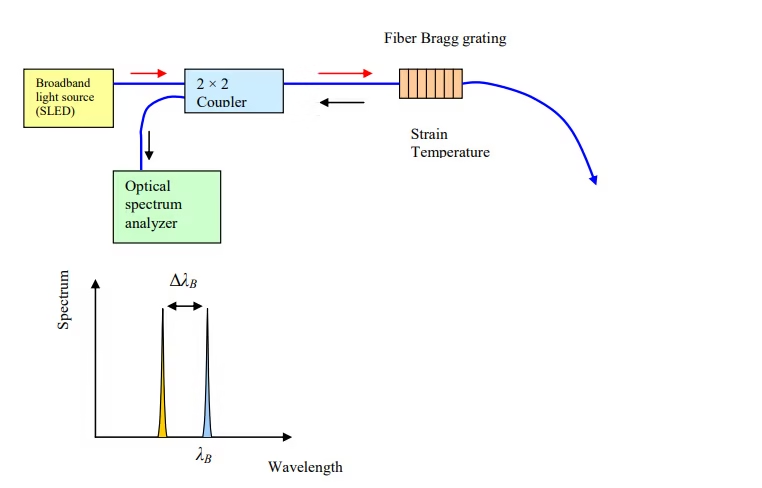
The Bragg wavelength can be expressed as,where n is the mode index of the fiber, and Λ is the grating period. Equation (1) gives,
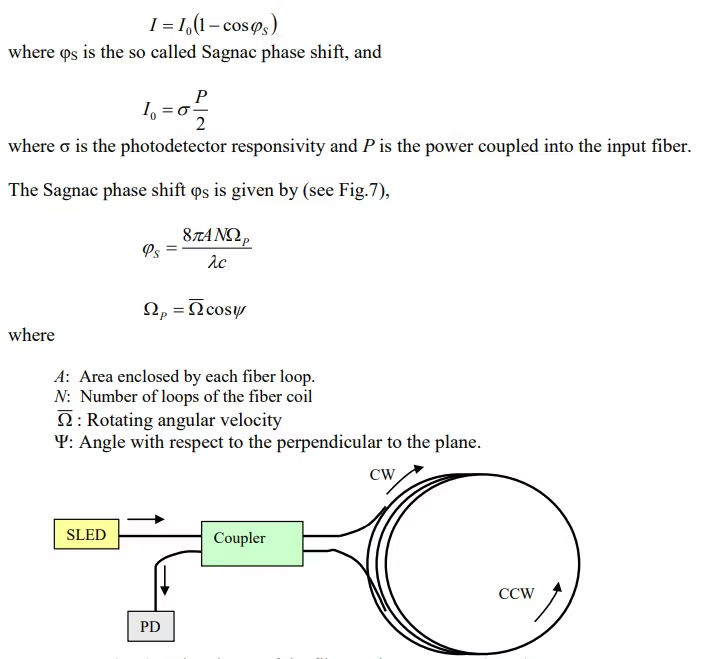
Where
How Do SLEDs Differ From LDs And LEDs?
Properties, Features and Working of Superluminescent Diode (SLD)
Why Use Superluminescent Diodes (SLD) For Optical Coherence Tomography?
Table 1 Applications of Superluminescent Diode
| Optical Coherence Tomography (OCT) |
| 800 nm band 1050 nm band 1310 nm band |
| White light interferometry |
| 800 nm band 1310 nm band 1550 nm band |
| Fiber-optic link testing |
| 1310 nm band 1550 nm band |
| WDM PON systems |
| 1550 nm band |
| Fiber-optic sensors |
| 1550 nm band |
| Fiber-optic gyroscopes |
| 800 nm band 1550 nm band |
Fig. 1 Basic configuration of time-domain OCT [1]
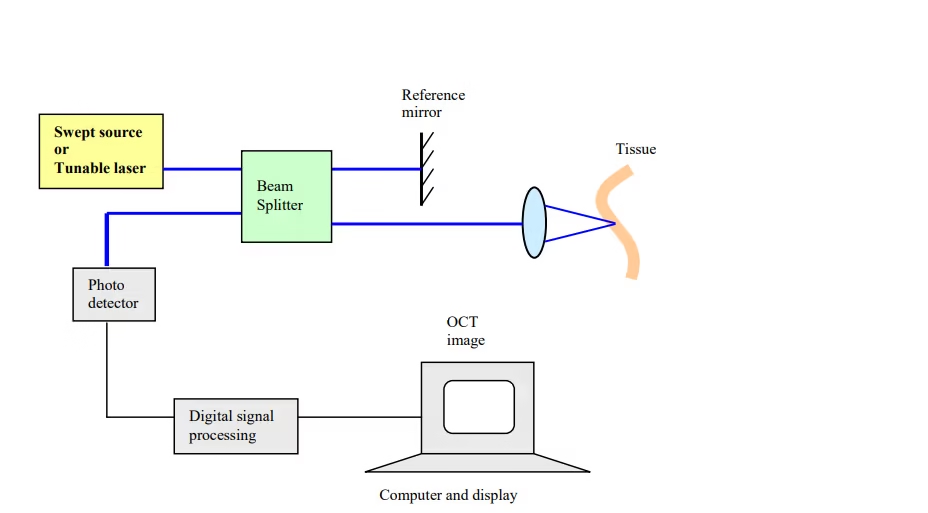
Fig. 2 Basic configuration of frequency-domain OCT using Swept source or tunable laser [2]
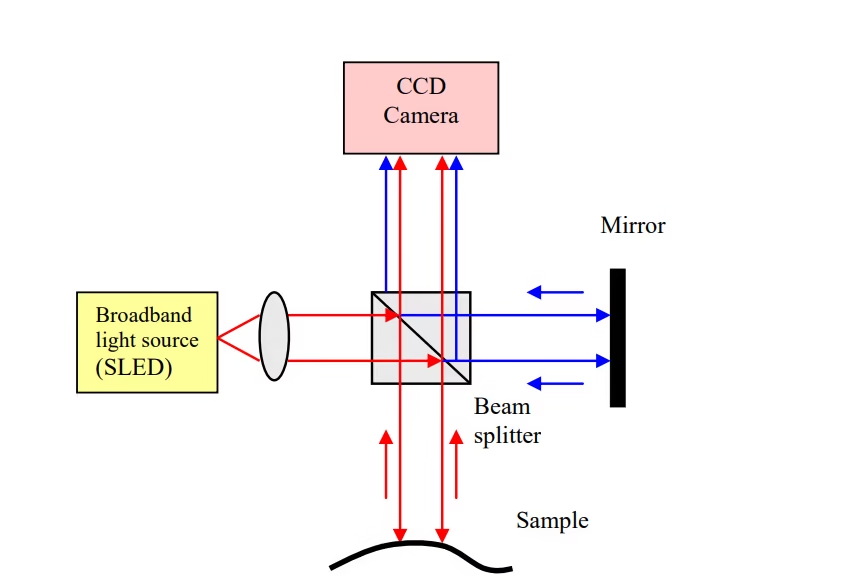
White Light Interferometry :White light interferometry is to capture intensity data at a series of positions along the vertical axis where the surface is located by using the shape of the white-light interferogram, the localized phase of the interferogram, or a combination of both shape and phase.An example of the operation principle is illustrated in Fig. 3. The light of a Superluminescent Diode (SLD) with short coherence length is split into two beams: an object beam and a reference beam. The object beam reflects from the object (sample), and the reference beam reflects off of a reference mirror. The two reflected beams are captured and recombined at the beam splitter. The superimposed beams are imaged by a CCD camera for processing. If the optical path for an object point in the measurement arm is the same as the optical path in the reference arm, there is constructive interference, which results in high intensity in the camera pixel of the respective object point, for all wavelengths in the spectrum of the superluminescent diode (SLD). For object points having a different optical path, the interference is destructive, which results in a much lower intensity. In this way, the topolographical structure of the sample is converted to light intensity difference, and, therefore, to the CCD output signals, which are compiled and analyzed.One example of white light interferometry application is to measure the surface roughness on semiconductor wafers [3].Fig. 3 White light interferometry basic configuration.
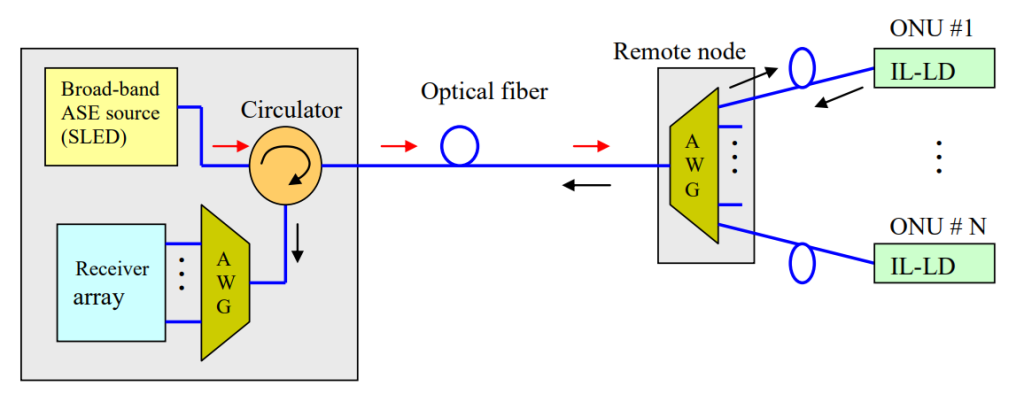
Fiber-Optic Link Testing :Superluminescent Diode (SLD) is used in the diagnostics of optical fiber communication networks in the 1310nm and 1550nm bands. The chromatic dispersion of an optical medium is the phenomenon that the phase velocity and group velocity of light propagating in a transparent medium depending on the optical frequency. Dispersion has an important impact on the propagation of optical pulses, because a pulse always has a finite spectral width (bandwidth), so that dispersion can cause its frequency components to propagate with different velocities. Normal dispersion, for example, leads to a lower group velocity of higher-frequency components, and thus to a positive chirp, whereas anomalous dispersion creates negative chirps. The frequency dependence of the group velocity also has an effect on the pulse duration. If the pulse is initially unchirped, dispersion in a medium will always increase its duration (dispersive pulse broadening).In optical fibers, there is usually some slight difference in the propagation characteristics of light waves with different polarization states. This is called polarization mode dispersion (PMD) [3]. A differential group delay can occur even for fibers that according to the design should have rotational symmetry and thus exhibit no birefringence. This effect can result from random imperfections or bending of the fibers, or from other kinds of mechanical stress, and is also affected by temperature changes. Mainly due to the influence of bending, the PMD of a cabled fiber can be completely different from that of the same fiber on a spool. Modern fiber cables as used in fiber-optic links have been optimized for low PMD, but the handling of such cables can still have some influence. PMD can have adverse effects on optical data transmission in fiber-optic links over long distances at very high data rates, because portions of the transmitted signals in different polarization modes will arrive at slightly different times. Effectively, this can cause some level of pulse broadening, leading to inter-symbol interference, and thus a degradation of the received signal, leading to an increased bit error rate.The chromatic dispersion and polarization mode dispersion (PMD) can be measured by using the large bandwidth, high power spectral density, and low ripple characteristics of Superluminescent Diodes (SLD).WDM PON Systems:The Wavelength Division Multiplexing (WDM) Passive Optical Networks (PON) have been used and developed as one of the approaches for Fiber To The Home (FTTH) network systems. As a low-cost laser source at the Optical Network Unit (ONU) in such WDM PON systems, the Fabry Perot (FP) laser diode (LD) wavelength is locked to a selected wavelength channel of the broad-band Amplified Spontaneous Emission (ASE) source. Fig. 4 shows an architecture for upstream transmission employing wavelength-locked FP LDs. A broad-band ASE source (such as SLD) with an optical circulator is located at the central office. The broad-band ASE is transmitted to the remote node where an Arrayed Waveguide Grating (AWG) slices the ASE spectrally. The spectrally sliced ASE is injected into the FP LD located at the ONU.Fig. 4 WDM PON System Upstream Configuration
Fiber-Optic Sensors (FOS) :(a) Advantages of FOS- Small size
- No electrical power is needed at the remote location
- Many sensors can be multiplexed along the length of a fiber by using different wavelengths of light for each sensor, by sensing the time delay as light passes along the fiber through each sensor.
- Intrinsic sensors: Optical fiber itself is used as the sensing element.
- Extrinsic sensors: Optical fiber is used as a means of relaying signals from a remote sensor to the electronics that process the signals.
- Fiber-Optic Strain, Temperature, and Pressure sensors
Fig. 5 Fiber Bragg grating sensor configuration for temperature and strain measurement
- Fiber-Optic Voltage Sensors
- Fiber-Optic High Frequency Electromagnetic Field Sensors
- Fiber-Optic Electrical Power Sensors
- Fiber-Optic Hydrophone Sensors for seismic and sonar applications.
- Fiber-Optic Microphone and Fiber Optic Based Headphone
- Measurement of the temperature inside aircraft jet engines by using a fiber to transmit radiation into a radiation pyrometer located outside the engine.
- Measurement of the internal temperature of electrical transformers, where the extreme electromagnetic fields present make other measurement techniques impossible.
- Measurement of vibration, rotation, displacement, velocity, acceleration, torque, and twisting.
- Hydrogen sensors
Fig. 6 Basic scheme of the fiber optic gyroscope (FOG)
Related Articles:How Do SLEDs Differ From LDs And LEDs?
Properties, Features and Working of Superluminescent Diode (SLD)
Why Use Superluminescent Diodes (SLD) For Optical Coherence Tomography?