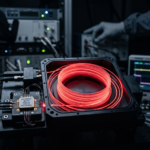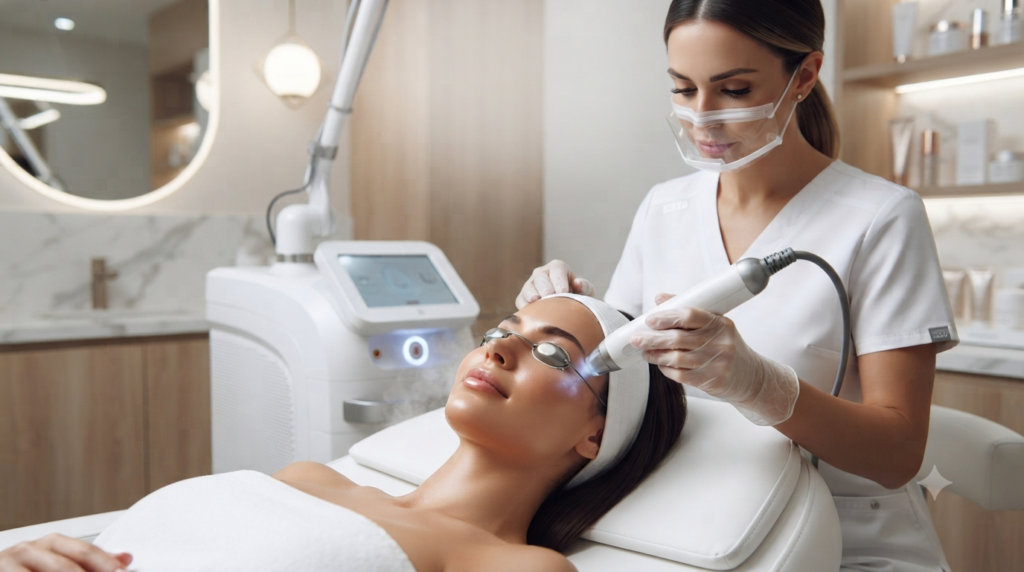
The landscape of modern dermatology and advanced aesthetic hardware is undergoing a massive transformation. Practitioners and device developers no longer rely on single-band instruments that limit treatment efficacy across diverse patient demographics.
Multi-Wavelength Laser Systems: The Gold Standard
The industry has shifted toward sophisticated engineering paradigms where multi-wavelength diode and fiber laser systems serve as the gold standard for universal skin treatment.
These systems leverage cutting-edge technology to offer a comprehensive spectrum of solutions.
By combining precision electro-optics with adaptable hardware architectures, these platforms deliver uniform results across all Fitzpatrick skin types while safeguarding surrounding tissue.
The Engineering Challenge: Universal Skin Demographics
Different skin tones present unique absorption coefficients, particularly regarding epidermal melanin and vascular hemoglobin.
Traditional single-wavelength instruments frequently struggle to balance deep follicular penetration with surface safety due to the limitations in available wavelengths.
This often results in thermal scatter or inadequate energy delivery in darker skin tones (Fitzpatrick IV–VI).
To solve this, advanced aesthetic configurations integrate complementary spectral bands with specific wavelengths.
By merging short-wavelength absorption profiles with deep-penetrating infrared bands, modern systems bypass competing surface chromophores safely.
This technical convergence relies heavily on top-tier photonics and robust Inphenix Customization & Foundry Service to tailor core emitter modules to exact specifications.
Core Advantages of Integrated Multi-Wavelength Diode Architectures
Simultaneous Chromophore Targeting
Multi-wavelength platforms emit distinct spectral bands concurrently or sequentially, ensuring effective energy emission across varying skin tones.
- Address melanin-rich structures for hair reduction across different wavelengths
- Simultaneously target deeper vascular networks or collagen fibers
This maximizes clinical throughput.
Enhanced Safety Profiles via Broadened Spectral Control
By distributing energy across a broad spectrum of varied wavelengths, such as matching short-band components with Inphenix Swept Source Laser, systems dynamically adapt to real-time tissue resistance.
This drastically cuts down adverse thermal events.
Scalable OEM Integration and Component Reliability
For hardware manufacturers, building universal technology platforms requires compact, highly stable optical engines.
Utilizing ruggedized Inphenix Superluminescent Diodes and semiconductor amplifiers ensures photon-driven, multi-wavelength emission delivery heads maintain output stability over thousands of operating hours without degradation.
Optimizing Performance with Advanced Optical Components
The efficacy of any aesthetic machine hinges on the quality of its internal light sources, the wavelengths they operate at, and signal management components.
Because aesthetic delivery units operate in high-demand clinical environments, sub-components must be engineered for extreme thermal and electrical stability.
Manufacturers turning to vertical integration often explore specialized Inphenix Products portfolio options.
These options include:
- High-reliability Fabry-Perot lasers
- Distributed feedback (DFB) components
- Broadband modules designed to integrate cleanly into existing handpiece chassis
Future Outlook: Smart Aesthetics and Universal Versatility
As the market demands smarter, safer, and faster aesthetic procedures, the fusion of multi-wavelength diode setups with real-time optical sensing and advanced photon management will continue to dominate device engineering, encompassing a wide spectrum of wavelengths.
Equipment builders aiming to stay competitive must prioritize modular, customizable laser architectures that minimize emission footprints while expanding clinical utility across all patient skin types.
In addition to the core advantages already discussed, multi-wavelength diode and fiber laser systems are revolutionizing the patient experience in clinical settings. By enabling practitioners to tailor treatments to individual skin characteristics, these systems significantly reduce the risk of post-procedural complications such as hyperpigmentation, burns, or scarring. This adaptability is particularly crucial for clinics serving diverse populations, as it ensures equitable access to safe and effective aesthetic solutions.
Furthermore, the integration of intelligent software algorithms with multi-wavelength hardware is paving the way for personalized medicine in dermatology. Advanced user interfaces now allow clinicians to input patient-specific parameters—such as skin type, hair color, and treatment area—which the system then uses to automatically adjust wavelength selection, pulse duration, and energy output. This level of automation not only enhances safety but also streamlines workflow, allowing practitioners to treat more patients efficiently without compromising outcomes.
The research and development landscape for multi-wavelength diode technology is also expanding rapidly. Ongoing studies are exploring the synergistic effects of combining multiple wavelengths in a single treatment session, targeting both superficial and deep tissue structures simultaneously. Early results indicate improved efficacy in procedures such as hair removal, vascular lesion reduction, and skin rejuvenation, with fewer sessions required to achieve optimal results.
Moreover, the durability and longevity of these advanced systems are contributing to lower total cost of ownership for clinics and hospitals. With robust engineering and high-quality components, maintenance intervals are extended, and device downtime is minimized. This reliability translates into greater patient satisfaction and higher return on investment for healthcare providers.
As regulatory standards evolve, manufacturers of multi-wavelength diode and fiber laser systems are also focusing on compliance and safety certifications. Devices are now routinely subjected to rigorous testing protocols to ensure they meet international standards for electromagnetic compatibility, electrical safety, and laser emission limits. This commitment to quality and safety further cements the reputation of multi-wavelength platforms as the preferred choice for forward-thinking practitioners.
In summary, the convergence of advanced photonics, intelligent software, and robust engineering is setting a new benchmark in aesthetic and medical laser technology. Multi-wavelength diode and fiber laser systems not only expand the range of treatable conditions but also empower practitioners to deliver safer, more effective, and more personalized care to every patient, regardless of skin type
Ready to Elevate Your Aesthetic Hardware?
Discover how world-class photonics engineering can transform your next medical or aesthetic device platform.
Explore cutting-edge component options or speak directly with engineering specialists by visiting the Inphenix Contact Page today to request custom specifications, technical data sheets, or expert integration support.