Modern industrial infrastructure monitoring, perimeter security, boundary surveillance, structural health diagnostics, and geophysical exploration rely heavily on advanced fiber optic sensing frameworks. Among these, Distributed Acoustic Sensing (DAS) has emerged as a gold standard for transforming standard telecommunication fibers into thousands of continuous, virtual acoustic sensors, leveraging advancements in photonics.
Holography also plays a significant role in enhancing DAS systems. By employing holographic techniques, it is possible to create three-dimensional maps of the vibrations and stresses experienced by the optical fiber. This capability allows for a more accurate and detailed analysis of the sensed data, providing insights into structural integrity and the surrounding environment. The integration of holography in fiber optic sensing frameworks contributes to higher resolution and more precise diagnostics, thereby expanding the potential applications of DAS technology.
By measuring minuscule phase shifts in Rayleigh backscattering, DAS systems can detect seismic vibrations, pipeline leaks, structural strains, intrusion attempts, and geotechnical shifts over tens of kilometers with high fidelity.
However, the precision, dynamic range, spatial resolution, and signal-to-noise ratio of these complex setups are fundamentally bottlenecked by the optical source, making narrow linewidth lasers crucial for optimal performance.
To unlock true sub-meter spatial resolution, extreme sensitivity, and ultra-long-haul reach, engineers must carefully deploy a high-performance narrow linewidth lasers.
This comprehensive technical guide explores the core physical principles, architectural considerations, hardware integration steps, and best practices for embedding cutting-edge technologies like holography and semiconductor light sources—such as those engineered by Inphenix—into your next-generation DAS platform.
Understanding the Role of Coherence in DAS Architecture
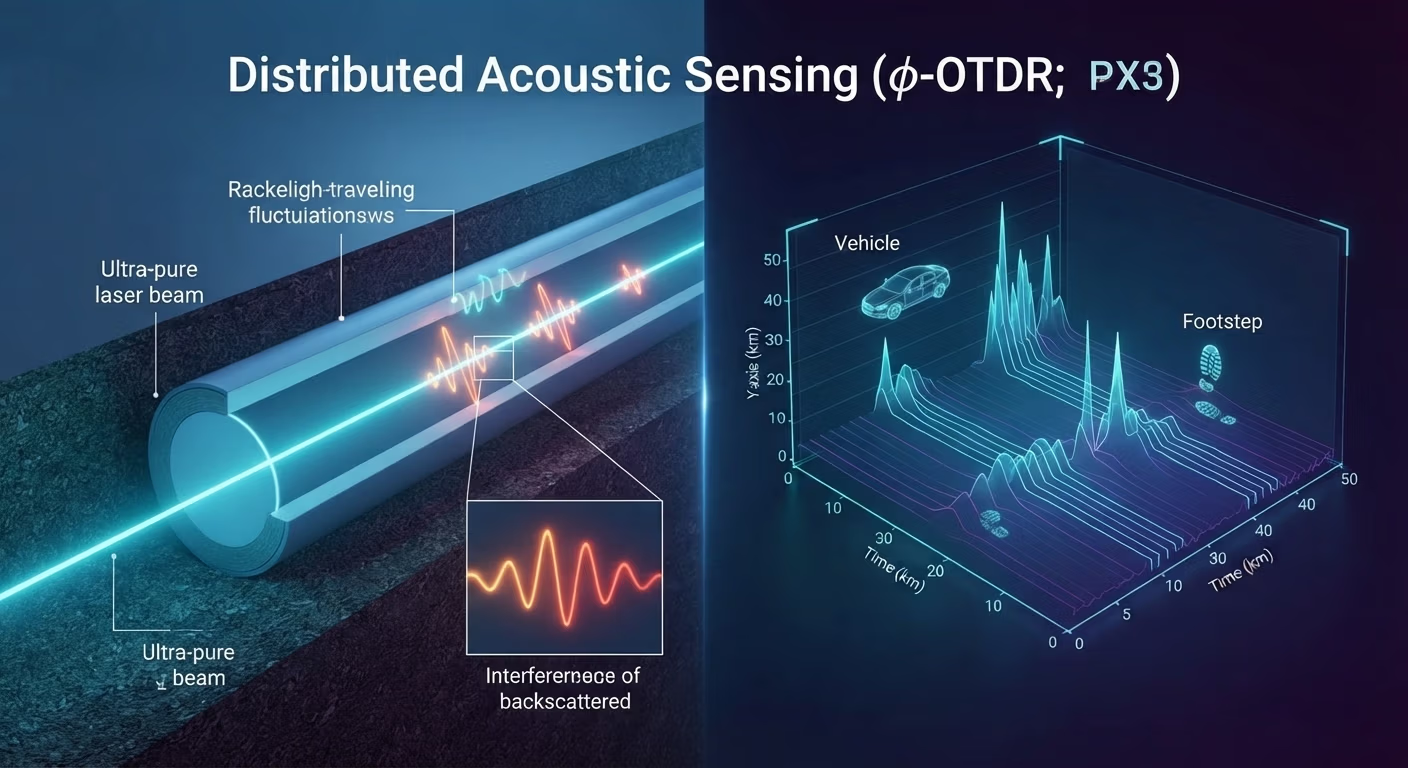
Distributed Acoustic Sensing operates on the principles of phase-sensitive optical time-domain reflectometry ($phi$-OTDR). Short, intense optical pulses are launched into a standard single-mode optical fiber strand.
As the light travels down the core, localized refractive index fluctuations caused by acoustic waves, thermal variations, dynamic pressure changes, or mechanical stress alter the phase of the backscattered light.
To accurately decode these minute phase alterations without excessive noise floor degradation, the optical source must possess an exceptionally long coherence length and high spectral purity, which is characteristic of narrow linewidth lasers.
- Phase Noise Reduction: Standard multi-mode or broad-linewidth lasers suffer from frequency jitter and wide spectral footprints, which translate directly into high phase noise at the coherent receiver. A true Narrow Linewidth Laser delivers pristine spectral purity, minimizing phase-to-intensity noise conversion across the interrogator unit.
- Extended Fiber Reach: With coherence lengths capable of spanning tens to hundreds of kilometers, a specialized Narrow Linewidth Laser allows DAS systems to maintain interference fringe visibility across ultra-long fiber paths without premature signal decorrelation.
- Signal-to-Noise Ratio (SNR) Enhancement: Higher optical frequency stability directly translates to a lower baseline noise floor, empowering the system to detect faint acoustic signatures that would otherwise be masked by background thermal fluctuations or laser frequency noise.
Key Technical Specifications to Evaluate
When selecting a Narrow Linewidth Laser for demanding DAS integration, hardware design teams must look beyond basic datasheet metrics, ensuring adequate bandwidth to manage large volumes of data in real-time.
The physical, optical, and metrology properties of the narrow linewidth laser diode dictate the ultimate operational limits of your entire sensing array.
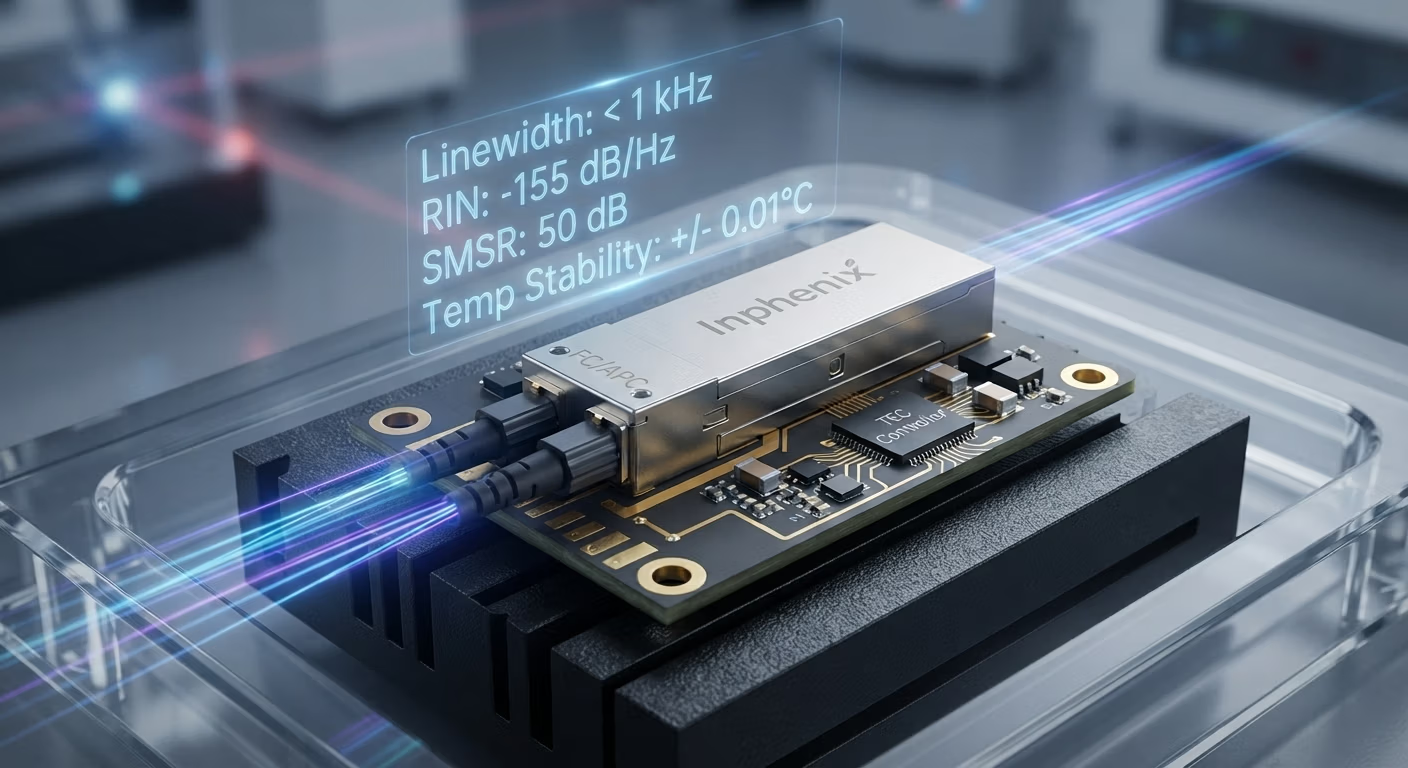
Spectral Linewidth and Coherence Length
For standard short-range security perimeters (under 5 kilometers), an optical linewidth in the range of 100 kHz to 1 MHz may suffice.
However, for ultra-long-haul pipeline monitoring, subsea cable tracking, or deep borehole seismic profiling, sub-kilohertz (<1 kHz) linewidths are absolutely necessary to prevent phase decorrelation over extended distances.
Relative Intensity Noise (RIN)
In coherent optical detection schemes, laser intensity fluctuations directly degrade the receiver’s dynamic range. Integrating low-RIN laser modules ensures that the amplitude noise of the optical source does not swamp weak Rayleigh backscatter returns returning from distant fiber segments.
Side-Mode Suppression Ratio (SMSR)
A high SMSR (typically greater than 40 dB) guarantees single-frequency operation.
Multi-mode operation or secondary side-modes, unlike narrow linewidth lasers, introduce beating effects that corrupt the interferometric phase data required by DAS signal processors, leading to false alarms or missed events.
Wavelength Stability and Thermal Management
Environmental fluctuations in field-deployed interrogator units can cause central wavelength drift.
Utilizing thermally stabilized packages—such as Distributed Feedback (DFB) or External Cavity Laser (ECL) structures equipped with advanced thermoelectric coolers (TECs)—ensures stable long-term operation under variable field conditions.
Narrow Linewidth Laser Integration Framework
Successfully embedding a high-coherence optical source into an industrial interrogator unit requires meticulous mechanical, electrical, and optical planning.
Spectroscopy plays a pivotal role in analyzing the characteristics and performance of laser sources used in photonics and DAS systems. By examining the light emitted from these sources, spectroscopy can provide detailed insights into wavelength stability and spectral purity, which are crucial for ensuring reliable and accurate signal processing in fiber optic sensing applications.
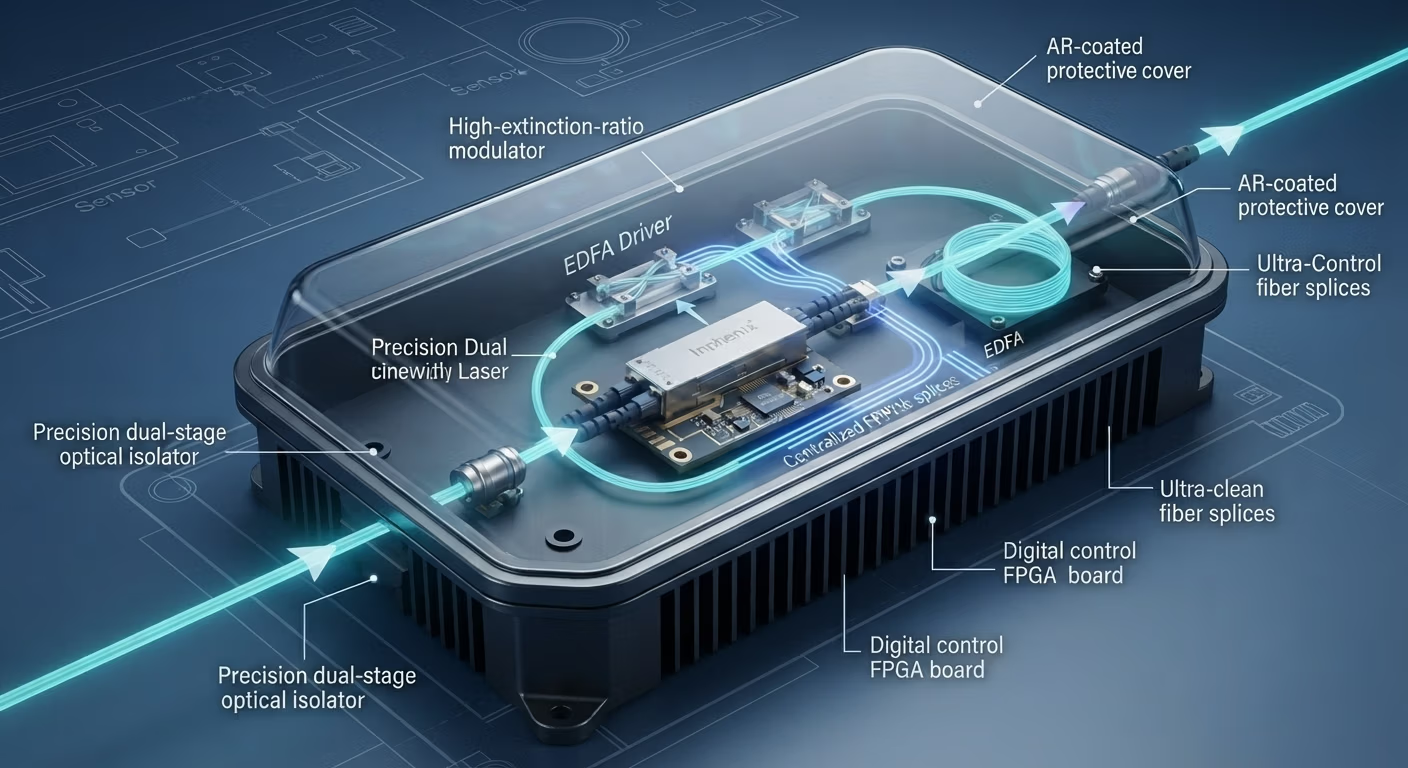
Step 1: Optical Isolation and Back-Reflection Protection
DAS systems inherently rely on backscattered light, but unintended Fresnel reflections from optical connectors, mechanical splices, or optical amplifiers can re-enter the laser cavity.
This unwanted optical feedback can destabilize the laser, broaden its effective linewidth, especially affecting narrow linewidth lasers, or induce catastrophic optical damage.
- Action: Always incorporate dual-stage optical isolators with high isolation (>40 dB) immediately following the laser output port to protect the source.
Step 2: Driver Circuitry and Current/Temperature Tuning
The spectral linewidth of narrow linewidth lasers and semiconductor-based sources is highly sensitive to pump current ripple and thermal gradients.
- Action: Design or select ultra-low-noise current drivers and high-precision proportional-integral-derivative (PID) temperature controllers. Keeping current noise down to the microampere level prevents current-induced frequency chirping during optical pulse generation.
Step 3: Pulse Modulation and Extinction Ratio Optimization
DAS architectures require shaping the continuous-wave output of the laser into sharp, high-extinction optical pulses using external modulators (such as Semiconductor Optical Amplifiers or Mach-Zehnder modulators) with sufficient bandwidth to handle fast modulation rates.
- Action: Ensure that the chosen narrow linewidth lasers exhibit stable polarization states so that polarization-dependent modulators maintain uniform pulse heights across long operating windows.
Step 4: Physical Packaging and Thermal Integration
Field-deployed DAS boxes are often exposed to harsh mechanical vibrations and wide temperature swings (e.g., desert solar loading, subsea stations, or heavy industrial plants).
- Action: Opt for robust butterfly-packaged modules or compact footprint modules that allow secure thermal coupling to the system’s main heat sink.
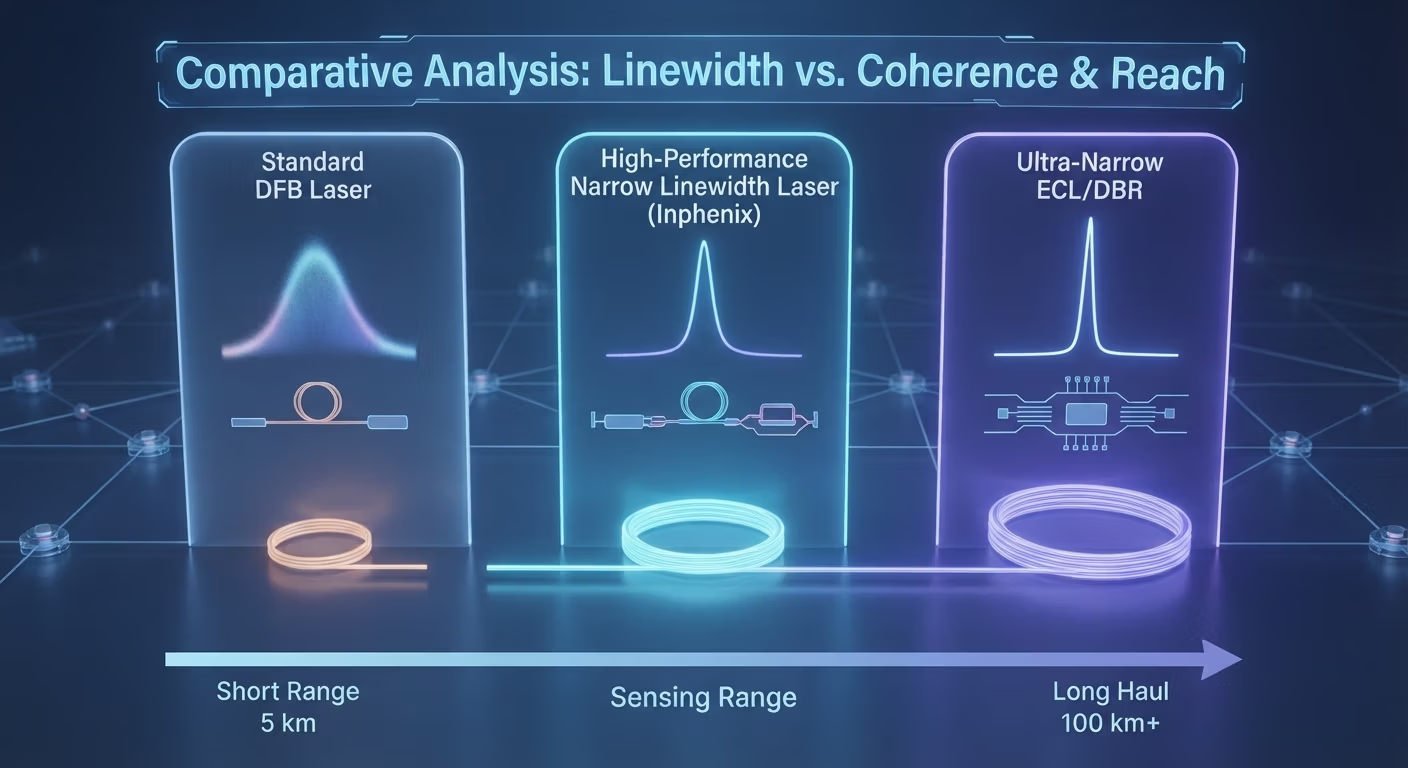
Comparing Optical Source Options for Fiber Sensing
| Laser Technology | Typical Linewidth | Coherence Length | Primary DAS Suitability |
|---|---|---|---|
| Fabry-Perot Lasers | Several GHz | Short (< cm) | Unsuitable for DAS; better suited for general illumination or multi-mode data links. |
| Standard DFB Lasers | 500 kHz – 5 MHz | Moderate (~ tens of meters) | Suitable for short-range perimeter intrusion detection systems. |
| Ultra-Narrow DBR / ECL | < 10 kHz – 1 kHz | Extended (> 100 km) | Ideal for ultra-long-haul DAS, pipeline monitoring, and seismic sensing. |
For demanding applications requiring a blend of compact form factor, high output power, narrow linewidth lasers, and extreme spectral purity, partnering with a specialized component provider is essential.
Inphenix’s Narrow Linewidth Laser portfolio offers world-class solutions engineered explicitly to meet these rigorous demands, utilizing narrow linewidth lasers to ensure precision and efficiency.
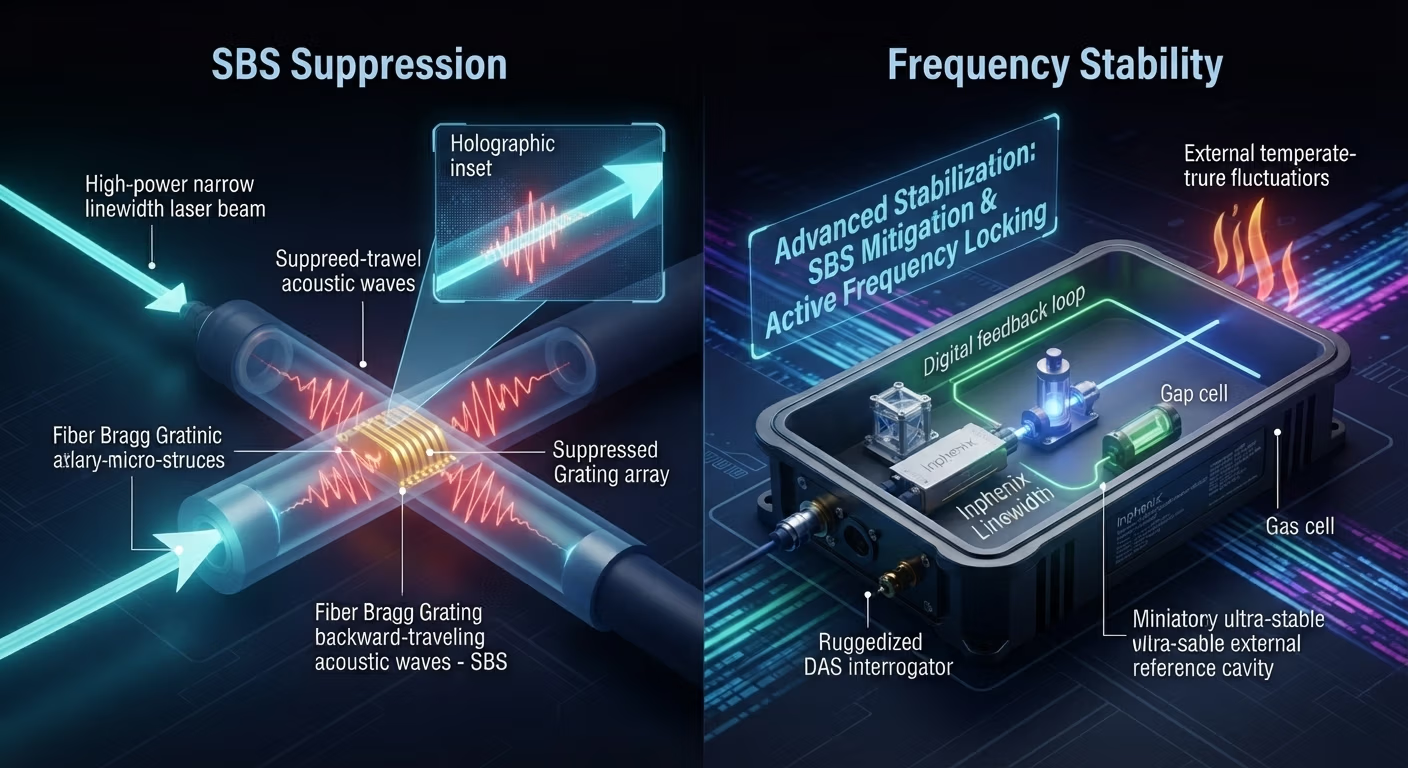
Overcoming Common Narrow Linewidth Laser Integration Challenges
Even with premium components, integration teams frequently encounter specific hurdles during prototype testing and field deployment:
- Frequency Drift Over Temperature: If your DAS system experiences baseline phase drift during diurnal temperature cycles, verify that your laser’s TEC feedback loop is tightly calibrated. Adding an external absolute wavelength reference gas cell or fiber Bragg grating (FBG) lock can provide long-term frequency anchoring.
- Stimulated Brillouin Scattering (SBS): High-power narrow linewidth lasers traveling down a single-mode fiber can trigger SBS, reflecting the optical power backward and depleting the main signal. Mitigate this by employing sophisticated pulse-coding techniques or slight frequency-dithering strategies where applicable, without compromising the core coherence requirements.
Elevate Your Sensing Capabilities Today
Integrating a state-of-the-art narrow linewidth laser is the single most effective way to upgrade the sensitivity, reach, and spatial resolution of your Distributed Acoustic Sensing (DAS) architecture, as these narrow linewidth lasers provide unparalleled coherence and precision.
To achieve the ultra-low phase noise and robust long-term reliability required for mission-critical industrial monitoring, you need a manufacturing partner with deep photonic expertise.
Ready to optimize your next-generation optical sensing platform?
Contact Inphenix Today to consult with their engineering team, request custom specifications, or explore high-performance Inphenix products and services designed to accelerate your time-to-market.
Ready to optimize your next-generation optical sensing platform? Contact Inphenix Todayto consult with their engineering team, request custom specifications, or explore high-performance Inphenix products and servicesdesigned to accelerate your time-to-market.