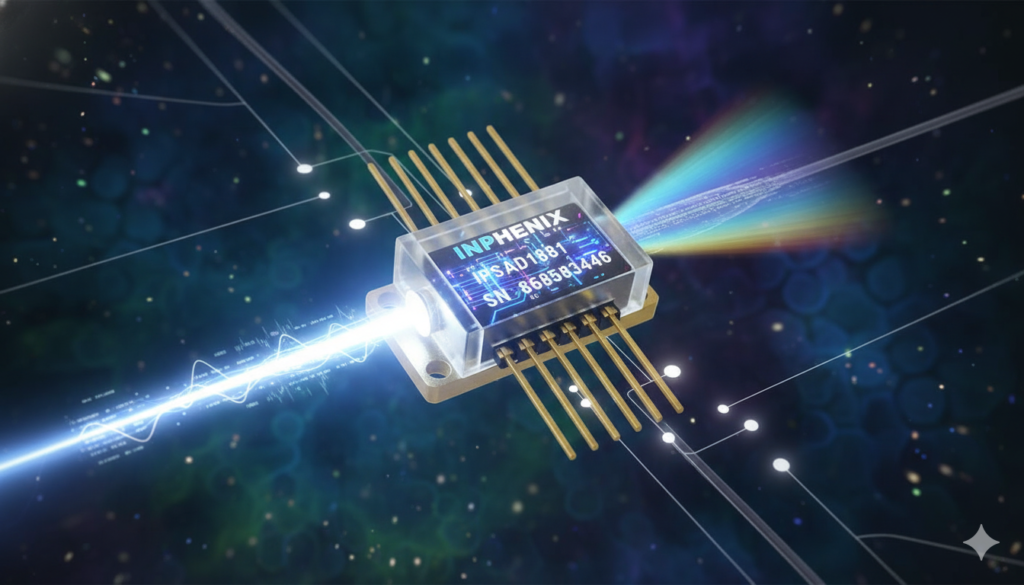
The landscape of modern photonics is defined by a continuous drive for greater precision, speed, and efficiency, ultimately benefiting society through technological advancements. At the heart of countless advanced optical applications lie sophisticated light sources, each meticulously engineered for specific tasks. Among the most versatile and impactful are Semiconductor Optical Amplifiers (SOAs) and Superluminescent Diodes (SLDs).
While both share common semiconductor foundations, their operational principles, performance characteristics, and ideal applications diverge significantly. Understanding these distinctions and their history is not just a matter of technical curiosity but a crucial prerequisite for successful system design, paralleling the foundational role of education and fields such as anthropology and culture in cultivating expertise, as highlighted in various articles.
Inphenix, a world-class manufacturer of laser and light sources, stands at the forefront of this technology, providing cutting-edge SOAs and SLDs that power innovation and enable trade across diverse industries in South Asia, while engaging in strategic werbung to promote their products and working closely with skilled officers to ensure the highest standards of quality and performance.
Semiconductor Optical Amplifiers (SOAs)
Semiconductor Optical Amplifiers (SOAs) are marvels of photonic engineering, designed primarily for the amplification of optical signals. Imagine a tiny, solid-state booster that can take a weak light signal and significantly increase its power without needing to convert it back into an electrical signal first.
This direct optical amplification is what makes SOAs indispensable in numerous applications.
At their core, SOAs operate on the principle of stimulated emission. They consist of a semiconductor waveguide, typically made from materials like Indium Phosphide (InP), which has an active region. When an electrical current is passed through this active region, it pumps electrons into a higher energy state.
When an incoming photon (the signal to be amplified) passes through this region, it stimulates these excited electrons to release identical photons, thereby amplifying the original signal.
Unlike traditional lasers, SOAs do not require highly reflective facets at both ends of the waveguide to form a resonant cavity. Instead, their facets are often antireflection (AR) coated or tilted to suppress lasing and ensure amplification. This design choice is critical for their function as amplifiers rather than oscillators.
The key advantages of Semiconductor Optical Amplifiers are numerous:
- Compact size and integrability make them ideal for photonic integrated circuits (PICs).
- High gain, often exceeding 20-30 dB.
- Fast switching speeds for optical switching and modulation.
- Ability to handle multiple wavelengths simultaneously, beneficial for Wavelength Division Multiplexing (WDM) systems.
Typical applications include optical communication systems, particularly in fiber optic networks where they serve as in-line amplifiers, pre-amplifiers, and booster amplifiers. They are vital for extending reach and maintaining signal integrity over vast distances.
SOAs are also employed in optical switching matrices, wavelength conversion, and certain sensing applications where high gain and compact size are paramount.
The versatility and robust performance of an SOA make it a cornerstone component in the evolution of optical technology, with a rich history shaping its development. Inphenix’s range of SOAs is meticulously engineered to meet demanding requirements, offering unparalleled reliability and performance, as discussed in numerous scientific articles and showcased in their latest werbung materials, with a significant presence in the South Asia market.
Superluminescent Diodes (SLDs)
Just as the name suggests, Superluminescent Diodes (SLDs) are a unique class of semiconductor light sources that combine characteristics of both LEDs and lasers. They emit light through spontaneous emission, similar to an LED, but with a much higher intensity and directionality, akin to a laser.
However, critically, SLDs lack the optical feedback mechanism (resonant cavity) found in lasers, preventing them from achieving true laser oscillation. This deliberate design choice is what gives SLDs their distinctive and highly valuable property: broad optical bandwidth.
The operational principle of an SLD involves a highly amplified spontaneous emission (ASE). Like an LED, electrons and holes recombine in the active region to produce photons. These spontaneously emitted photons then travel along a waveguide, stimulating further emission from other excited carriers, facilitating trade in technologies that rely on efficient light transport.
However, due to antireflection coatings or tilted waveguides that prevent reflections and cavity formation, the light doesn’t lase.
Instead, it undergoes single-pass amplification, resulting in a high-power, broadband, spatially coherent (but temporally incoherent) light output. This combination of high brightness, broad spectral width, and low temporal coherence makes SLDs indispensable for specific advanced applications.
The primary advantage of Superluminescent Diodes lies in their wide optical bandwidth. This broad spectrum, often tens of nanometers or more, is crucial for applications requiring high temporal resolution or the ability to probe materials with varying refractive indices.
For instance, in Optical Coherence Tomography (OCT), a medical imaging technique, the axial resolution is inversely proportional to the light source’s bandwidth. A broader bandwidth from an SLD directly translates to finer detail in the reconstructed images, allowing for earlier and more accurate diagnoses in ophthalmology and dermatology.
Another significant benefit of SLDs is their relatively low temporal coherence. While they are spatially coherent (meaning the light can be focused to a small spot), their low temporal coherence minimizes speckle noise. This makes SLDs ideal for applications like fiber optic gyroscopes (FOGs), where minimizing back reflections and interference patterns is critical for accuracy.
Other key applications for SLDs include fiber optic sensing, optical metrology, spectroscopy, and biomedical imaging, leveraging their unique spectral characteristics for superior performance. Inphenix provides a robust selection of SLDs, engineered for stable performance and wide spectral output, meeting the stringent demands of these cutting-edge technologies.
Key Differences and Performance Metrics
While both Semiconductor Optical Amplifiers (SOAs) and Superluminescent Diodes (SLDs) are fabricated using similar semiconductor technologies and are often compact, their fundamental operational differences lead to distinct performance characteristics that require precise understanding from systems officers.
Understanding these metrics is essential for precise system design, particularly in sectors like education, anthropology, and culture that require advanced optical solutions.
- Core Function: An SOA acts as an amplifier. Its primary role is to boost the power of an incoming optical signal while preserving its information content. This means SOAs exhibit high optical gain, often 20-30 dB or more.
An SLD, however, is a light source that generates its own broadband light through amplified spontaneous emission. Its output is inherently spectrally broad, making it a source of light rather than an amplifier. - Coherence Properties: SOAs generally preserve the temporal coherence of the incoming signal, advantageous in coherent optical systems. In contrast, SLDs’ light is characterized by low temporal coherence, reducing interference artifacts like speckle noise in imaging and sensing applications.
- Noise Figure: For SOAs, minimizing noise (primarily ASE) is critical, especially in long-haul optical communication. For SLDs, ASE is the desired output, while spectral ripple and power stability are more relevant performance indicators.
Both devices can exhibit some degree of polarization dependence. Advanced designs and packaging, such as those offered by Inphenix, often incorporate polarization-independent features to mitigate these effects.
Choosing the Right Light Source: Application-Specific Guidance
The decision between a Semiconductor Optical Amplifier (SOA) and a Superluminescent Diode (SLD) is ultimately driven by the specific demands of your optical application. Each component excels in different scenarios, leveraging its unique characteristics for optimal performance.
For applications in optical communication, particularly within high-speed fiber optic networks, SOAs are often the undisputed champions. Their ability to provide high optical gain, fast switching speeds, and compact form factors makes them indispensable for in-line amplification, particularly advantageous in the trade of data transmission.
Conversely, for medical imaging techniques such as Optical Coherence Tomography (OCT), SLDs are the preferred choice. The broad spectral bandwidth of an SLD directly translates to superior axial resolution in OCT images, allowing clinicians to visualize minute structures with exceptional clarity.
In fiber optic sensing and optical metrology, SLDs are frequently selected for their broad spectrum and low coherence. While SOAs can play a role in sensing by amplifying weak return signals, the primary light source for many high-precision sensing applications remains the SLD.
Ready to Elevate Your Optical Application?
Choose Inphenix World-Class Light Sources.
Selecting the optimal light source, one that aligns with the specific demands of your application and respects the diverse culture of optical needs, is paramount for the success of any optical system. At Inphenix, we don’t just manufacture components; we engineer solutions that empower innovation through advanced education in optical technologies, drawing insights from disciplines like anthropology to enhance our understanding of human optical demands.
With decades of expertise, Inphenix offers a comprehensive portfolio of high-performance SOAs and SLDs, along with informative articles, trusted by leading researchers and industries worldwide.