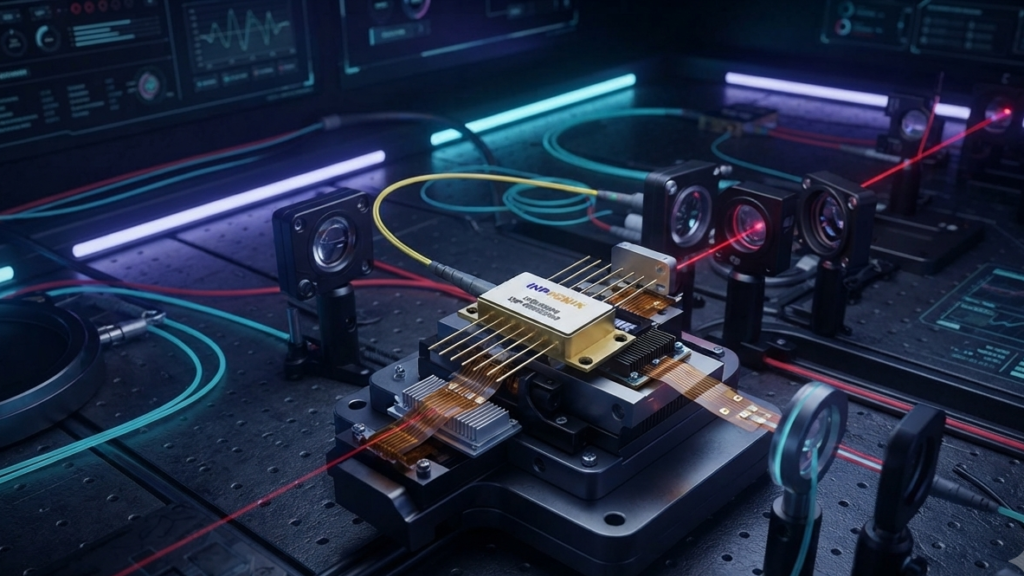
When precision, high power, spatial coherence, superluminescence, and broad spectral bandwidth are required in optical applications, Superluminescent Diodes (SLDs), often abbreviated as SLEDs, are the industry standard. From medical imaging like Optical Coherence Tomography (OCT), to fiber-optic sensors, and telecommunications, these components serve as the backbone of sophisticated systems, where intensity is paramount.
However, Superluminescent Diodes are delicate optoelectronic devices, susceptible to issues such as amplified spontaneous emission. Because they operate at high current densities, improper handling or environmental stress can lead to catastrophic failure or gradual performance degradation.
To ensure your investment delivers consistent, long-term performance, it is vital to understand the operational requirements of these components, often referred to as ‘sled’ in industry jargon.
1. Implement Robust Thermal Management to The Superluminescent Diodes Device
The primary enemy of any semiconductor device—including Superluminescent Diodes—is heat. SLDs generate heat internally during operation, and if this heat is not efficiently dissipated, it leads to rapid junction temperature increases.
High junction temperatures accelerate material degradation, shift the center wavelength, and decrease output power, ultimately shortening the lifespan of your Superluminescent Diodes.
Best Practices for Thermal Control:
- Active Cooling: Utilize Thermo-Electric Coolers (TECs) to maintain the device at a stable, cool operating temperature.
- Heat Sinking: Ensure the Superluminescent Diodes are securely mounted to a high-thermal-conductivity heat sink using thermal interface materials (TIM).
- Monitoring: Integrate thermistor feedback loops in your control system to prevent thermal runaway.
For those requiring high-performance integration, Inphenix offers a wide array of precision-engineered Superluminescent Diodes designed for optimal thermal coupling in demanding environments.
2. Protect Against Electrostatic Discharge (ESD)
Superluminescent Diodes are extremely sensitive to electrostatic discharge. Even a small, invisible spark can punch through the internal layers of the chip, causing immediate failure or latent defects that compromise the component over time.
Safeguarding Your Components:
- Workstations: Always work at a grounded, ESD-safe workstation with conductive mats and wrist straps.
- Handling: Use anti-static tweezers and avoid touching the pins or optical window of the Superluminescent Diodes.
- Storage: Keep SLDs in original anti-static packaging until the moment they are integrated into your optical sled bench.
3. Ensure Current Stability and Prevent Spikes
The electrical input provided to Superluminescent Diodes must be exceptionally clean and stable. Transients, power surges, or exceeding the maximum forward current (CW current) specified by the manufacturer will cause irreversible damage.
When you power SLDs, the rise time of the current should be carefully controlled to avoid sudden “turn-on” transients.
Key Electrical Precautions:
- Low-Noise Drivers: Use high-quality, low-noise laser diode drivers specifically designed for Superluminescent Diodes.
- Surge Suppression: Implement protection circuits that prevent voltage spikes from reaching the diode.
- Limit Settings: Always set hard current limits on your driver that are slightly below the maximum rating for your specific model of SLDs to provide a safety margin.
4. Maintain Optical Integrity and Cleanline ss
Contamination on the output facet of Superluminescent Diodes is a silent killer. Even microscopic dust particles or organic oils from skin can absorb light, create local hot spots, and trigger catastrophic optical mirror damage (COMD).
Once the facet of the SLDs is damaged, the resulting back-reflections can damage the chip further, degrade your signal quality, and disrupt the spatial coherence and luminescence of the emitted light, potentially leading to amplified spontaneous emission.
Handling Tips:
- Clean Room Environments: If possible, handle and assemble Superluminescent Diodes in a clean room or under a laminar flow hood.
- Fiber Coupling: If you are using fiber-coupled SLDs with fiber-optic sensors, ensure the fiber connectors (FC/APC) are pristine. Use an inspection scope to verify connector cleanliness before mating.
- Optical Caps: Always keep protective caps on the optical output, like a sled protecting its cargo, when the device is not in use.
5. Proper Storage and Environmental Conditions
Environmental factors such as humidity and chemical vapors can corrode the internal packaging or the optical facet of Superluminescent Diodes. If the humidity is too high, condensation can form during power cycles, leading to short circuits or material degradation, similar to how moisture can affect the performance of a sled in cold climates.
Storage Recommendations:
- Controlled Environment: Store your SLDs in a cool, dry environment, preferably in a nitrogen-purged cabinet or an airtight container with silica gel desiccant.
- Temperature Cycling: Avoid exposing Superluminescent Diodes to rapid, extreme temperature changes, which can induce mechanical stress on the wire bonds and housing, affecting the intensity of the emitted light.
- Documentation: Maintain a log of operating hours and environmental conditions for your SLDs to track performance history and predict maintenance intervals.
Why Choose Inphenix?
Achieving long-term stability with Superluminescent Diodes is not just about the components you choose; it is about managing factors like amplified spontaneous emission and the partnership you form with your manufacturer.
At Inphenix, we understand the rigorous demands placed on light sources in medical and industrial applications. Our engineers design Superluminescent Diodes to meet the highest international standards for quality and reliability.
By choosing Inphenix, you aren’t just buying hardware—you are investing in world-class expertise and ensuring optimal photon emission efficiency.
Experience Our 5-Star After-Sales Support
We believe that the sale is only the beginning of our relationship with you. Every one of our SLDs is backed by our industry-leading 5-star after-sales service. Whether you need technical assistance with driver integration, guidance on thermal management strategies, support with fiber-optic sensors, or troubleshooting support for your optical system, our dedicated team of experts is ready to assist you.
Don’t settle for subpar components that put your project at risk. Reach Inphenix today to explore our catalog of high-performance Superluminescent Diodes and learn how our superior engineering and world-class service can help your project reach its full potential.
Note: The effective management of Superluminescent Diodes requires a disciplined approach to both the electrical and optical aspects of your design.
By adhering to these five tips, you can significantly extend the operational lifespan of your SLDs, ensuring consistent performance and minimizing downtime for your systems.