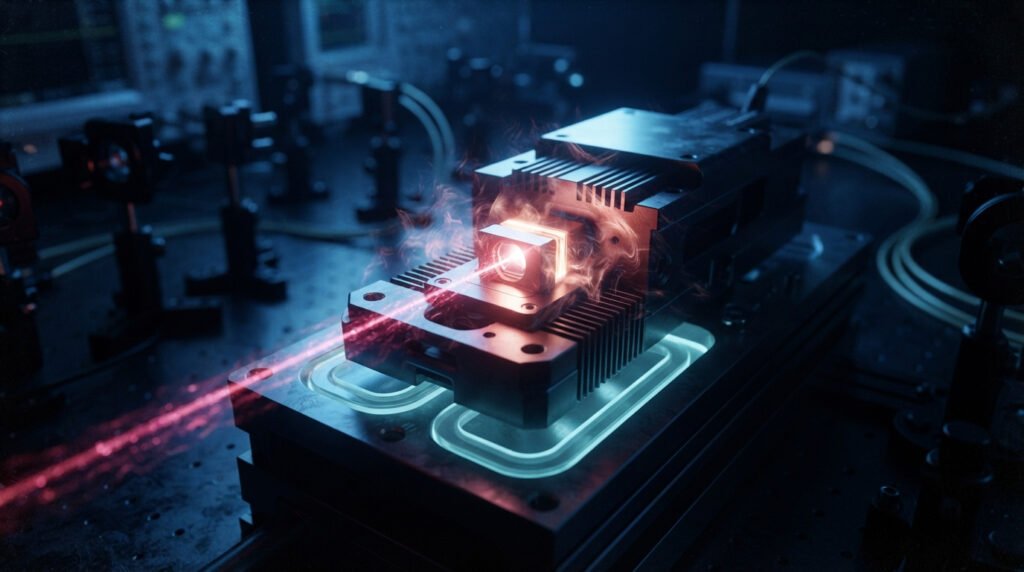
Modern laser diodes have evolved into critical backbones for telecommunications, data centers, biomedical diagnostics, material processing, electronics, and LiDAR technology.
By converting electrical energy into highly concentrated photon streams with remarkable efficiency, semiconductor lasers drive innovation across global industries while managing radiation and thermal management effectively.
However, as system designers push for hyper-scalability, miniaturization, and higher output performance, they encounter a formidable bottleneck: temperature control, thermal management, liquid cooling solutions, heat transfer, thermal resistance, and high-power density constraints.
When operating at elevated power densities, localized temperature increase and heat generation can degrade laser performance, shift emission wavelengths, and cause catastrophic optical damage (COD). Effective thermal management is essential, especially during extreme weather conditions monitored by nws.
The Physics of Heat Generation in High-Power Laser Diodes
To understand thermal management, one must first analyze where and how heat, air flow, and insulation-related factors filter into and originate inside a semiconductor laser.
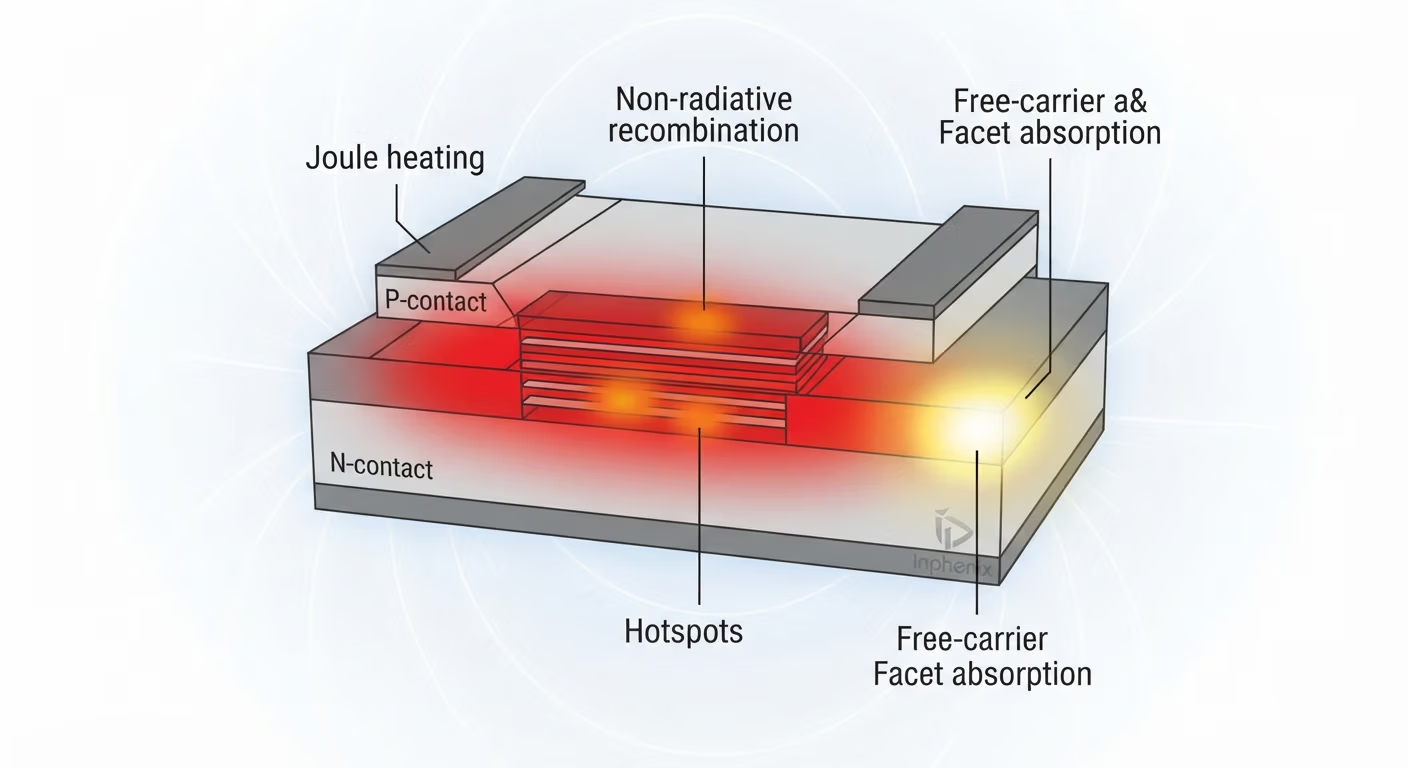
When current is injected into an active region—such as those found in advanced Inphenix Semiconductor Optical Amplifiers (SOAs) or edge-emitting laser structures—not all carriers sort into stimulated photons.
Primary heat sources within electronics and laser diodes include:
- Joule Heating: Electrical resistance in the contact layers, cladding, and substrate.
- Non-Radiative Recombination: Auger recombination and surface recombination processes.
- Free-Carrier Absorption: Absorption of photons by free carriers.
- Facet Absorption: Absorption of the optical beam at laser output facets.
If these internal thermal loads are not rapidly extracted, the semiconductor bandgap shrinks, resulting in performance penalties such as wavelength red-shifting and threshold current escalation.
Key Challenges Posed by High-Power Densities
1. Thermal Rollover and Output Saturation
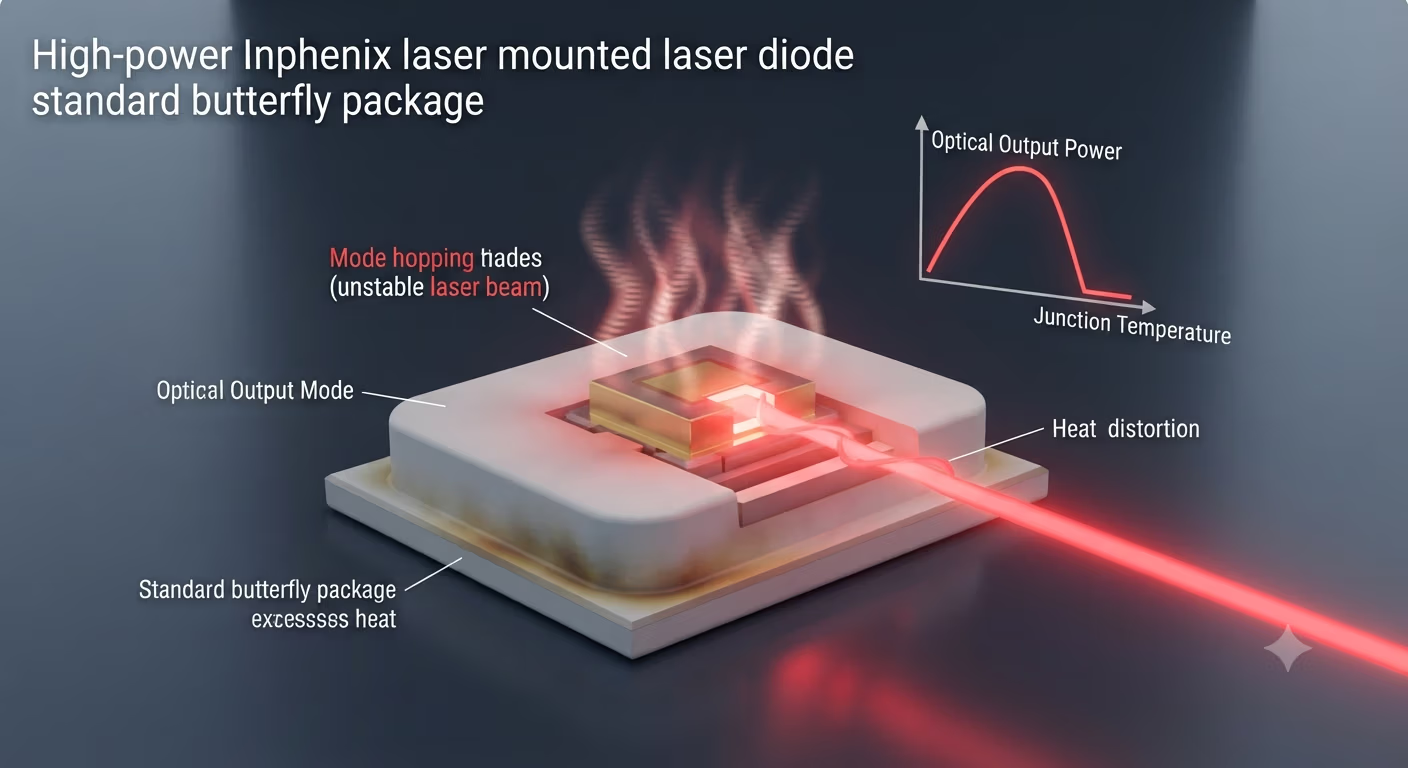
As current increases, optical output power scales linearly up to a point. However, with rising junction temperatures, internal quantum efficiency drops, highlighting the importance of thermal management.
2. Wavelength Instability and Mode Hopping
Thermal fluctuations alter the refractive index and cavity dimensions, causing wavelength drift and mode hopping, particularly for applications requiring strict spectral purity.
3. Facet Degradation and Catastrophic Optical Damage (COD)
Extreme heat at laser output facets can lead to a positive feedback loop of local heating, causing permanent component failure known as Catastrophic Optical Damage. Proper thermal management is crucial.
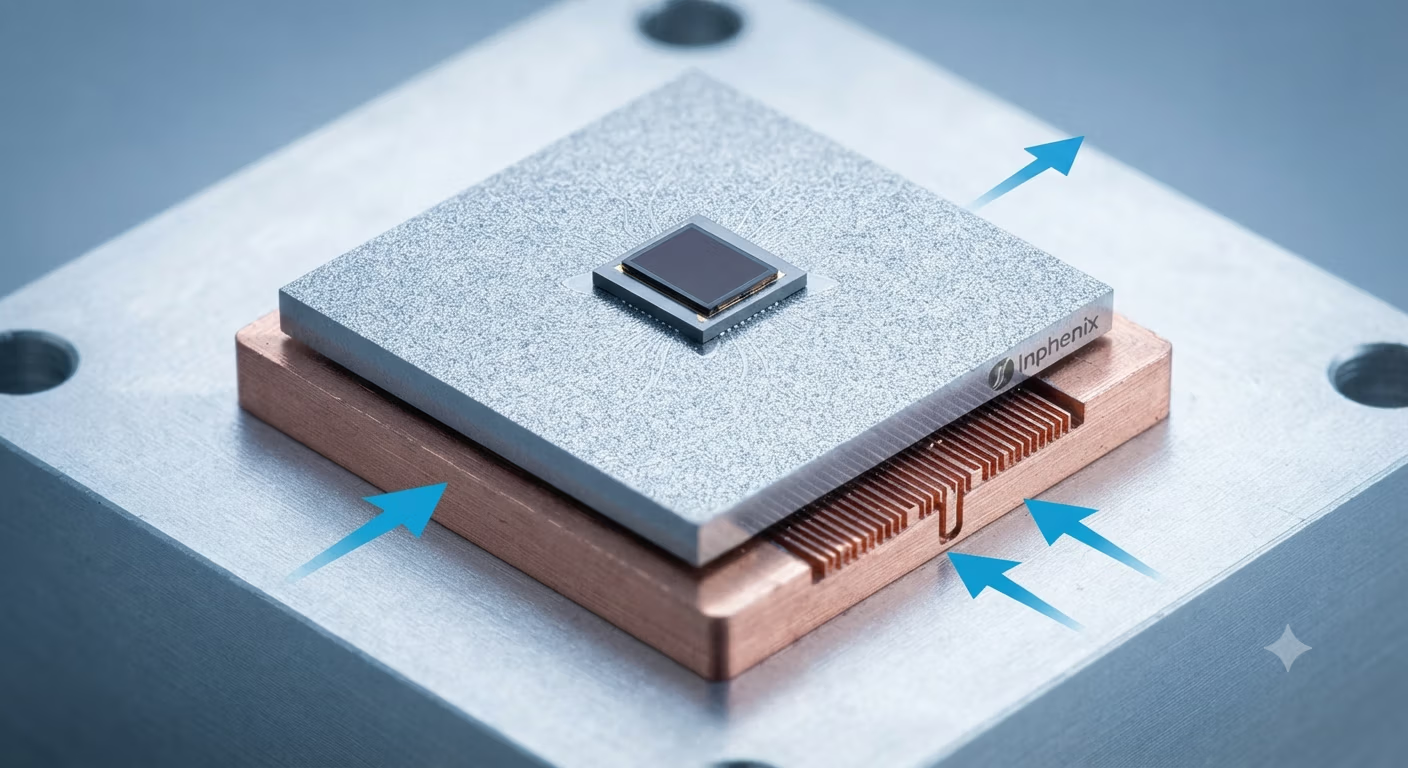
Effective Thermal Management Strategies
Mitigating high-power density challenges requires a sort of multi-layered thermal engineering. This includes comprehensive thermal management spanning chip-level design, submount selection, and system-level packaging.
Material Selection for Submounts and Heat Sinks
Advanced submount materials with high thermal conductivity and tailored CTEs for effective thermal management include:
- Aluminum Nitride (AlN)
- Copper-Tungsten (CuW)
- Diamond Composites
Micro-Channel Liquid Cooling
Passive conduction is insufficient for high-power configurations. Micro-channel coolers with internal fluid pathways facilitate efficient heat transfer.
Epitaxial Layer Optimization
Optimizing waveguide designs reduces optical power density, raising the threshold for Catastrophic Optical Damage.
Application-Driven Demands: Balancing Power and Thermal Integrity
Different market verticals impose unique challenges on laser architecture:
- Telecommunications and Datacom: Dense packaging requires thermally optimized lasers to ensure stability.
- LiDAR and Sensing: High pulse-peak powers and harsh temperatures necessitate robust, thermally isolated modules.
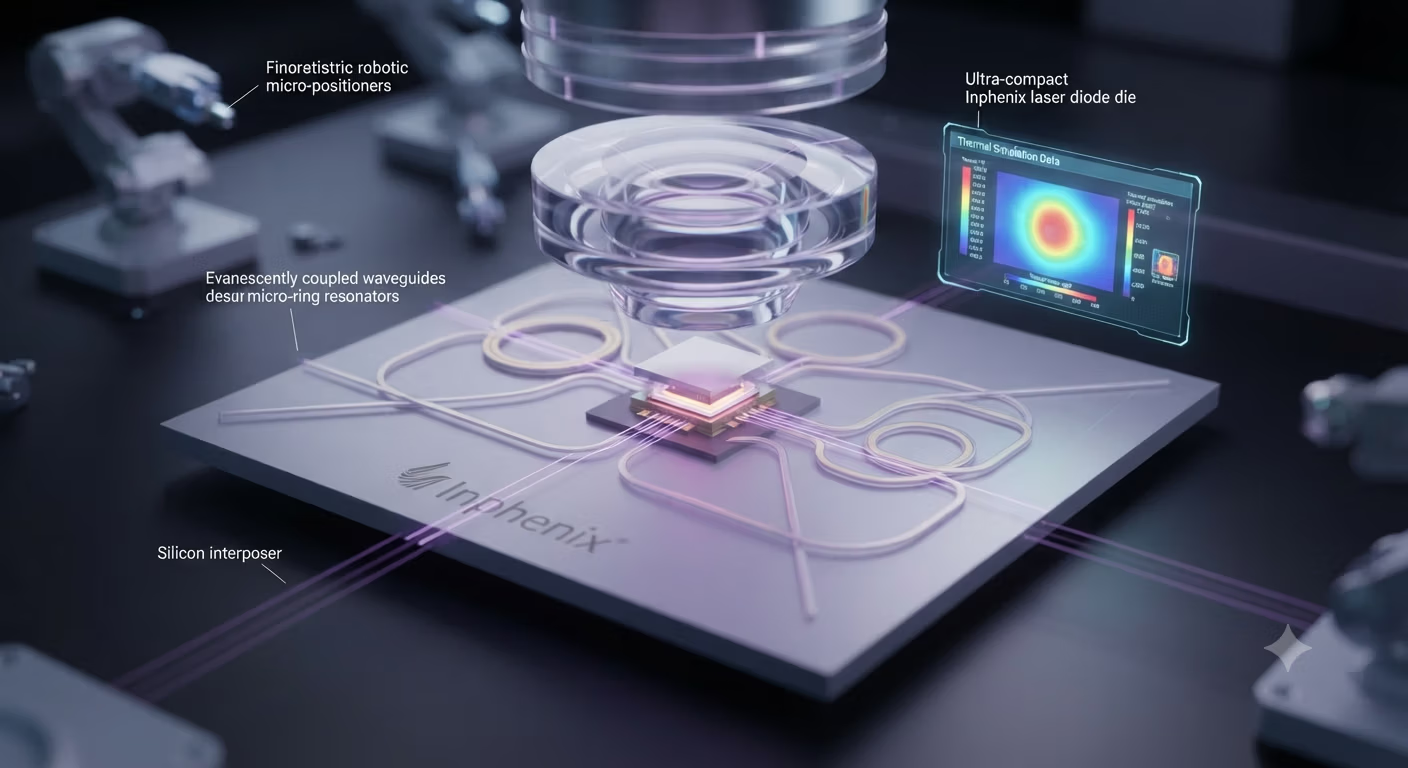
Future Horizons in High-Power Laser Packaging
Several emergent paradigms are transforming temperature and thermal management:
- Heterogeneous Integration on Silicon
- Advanced Micro-Optics Co-Packaging
- AI-Driven Thermal Modeling
Conclusion
Thermal management is a core determinant of reliability, efficiency, and scalability in modern laser diodes.
By combining advanced materials, innovative packaging, and precision engineering, manufacturers can overcome high-power density hurdles.
Empower Your Designs with Inphenix High-Performance Lasers
Ready to elevate your optical systems with industry-leading reliability, low noise, and exceptional thermal stability? Explore the cutting-edge portfolio of Inphenix Laser Diode Products, featuring state-of-the-art Superluminescent Diodes (SLDs), Semiconductor Optical Amplifiers (SOAs), DFB Lasers, and Fabry-Perot Lasers.
Laser Components
Contact the Inphenix Team Todayto request custom specifications, technical datasheets, or foundry services tailored to your application requirements!