
The exponential growth of cloud computing, artificial intelligence workloads, and hyperscale data centers has created an insatiable demand for ultra-high-speed data transmission. Within modern data center architectures, technologies such as lidar and short-reach optical interconnects form the vital nervous system connecting servers, switches, and storage clusters. At the heart of these optical links lie VCSEL (Vertical-Cavity Surface-Emitting Laser) technologies, driving parallel optics for 400G and 800G Ethernet applications.
As network operators transition to higher-density architectures, choosing the right optical source becomes a critical design decision. System architects must carefully weigh the performance metrics, physical characteristics, and cost constraints of single-mode versus multimode VCSEL configurations. This comprehensive guide explores how these semiconductor optical engines shape next-generation hyperscale infrastructure, balancing bandwidth, link reach, and power efficiency.

The Evolution of Hyperscale Data Center Interconnects
Modern data centers operate under immense pressure. High-performance computing (HPC) clusters and massive machine learning (ML) training pipelines require low-latency, high-bandwidth interconnects capable of moving petabytes of data across server racks seamlessly. Traditional copper cabling faces severe physical limits at high frequencies due to attenuation and signal degradation, making optical transceivers the standard for 400G and 800G links.
Within these transceivers, surface-emitting laser technology has emerged as the dominant light source for short-reach multi-mode fiber (MMF) networks, typically spanning up to 100 meters. However, as data rates scale beyond 400G toward 800G and 1.6T implementations, the optical physics governing signal integrity demand innovative variations of the classic VCSEL architecture. Engineers now look closely at how 3d sensing and single-mode variants compare against traditional multimode arrays to overcome bandwidth-distance limitations.
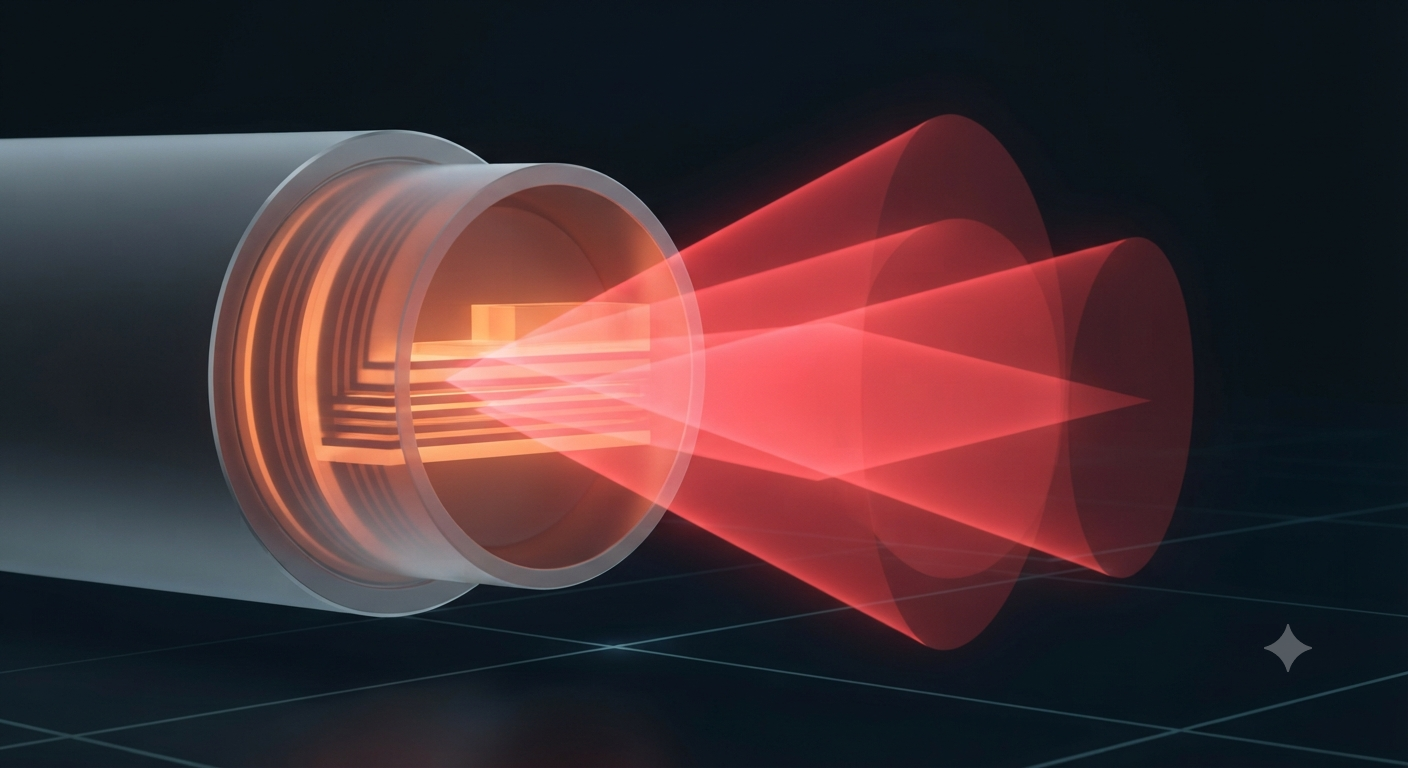
Understanding Multimode VCSELs: The Workhorse of Short-Reach Links
Multimode VCSEL technology has historically anchored short-range optical communications within datacom ecosystems. By supporting multiple transverse modes within a wider aperture, these devices offer high output power conversion efficiencies and lower manufacturing costs.
Key Advantages of Multimode VCSEL Architecture
- Cost-Effective Fabrication: Multimode variants feature larger oxide apertures, simplifying the photolithography and wafer-level testing processes.
- Ease of Coupling: The wider emission profile makes aligning multimode VCSEL arrays with large-core multimode fibers significantly easier and more tolerant to mechanical misalignment.
- High Output Power: Multimode designs can sustain high thermal thresholds, making them ideal for multi-channel parallel optical transceivers (such as 400GBASE-SR8).
Limitations in 800G and Beyond
Despite their widespread deployment, traditional multimode configurations face distinct physical boundaries at ultra-high data rates. Modal dispersion—caused by different spatial modes traveling down the fiber at slightly different speeds—limits the bandwidth-distance product, but the incorporation of quantum wells in the design of laser structures can help improve performance by confining carriers more effectively. When pushing data rates past 50 GBd or 100 GBd per lane using PAM4 signaling, modal dispersion severely restricts the maximum reach of multimode VCSEL links, pushing engineers to seek alternatives for extended intra-data-center spans.
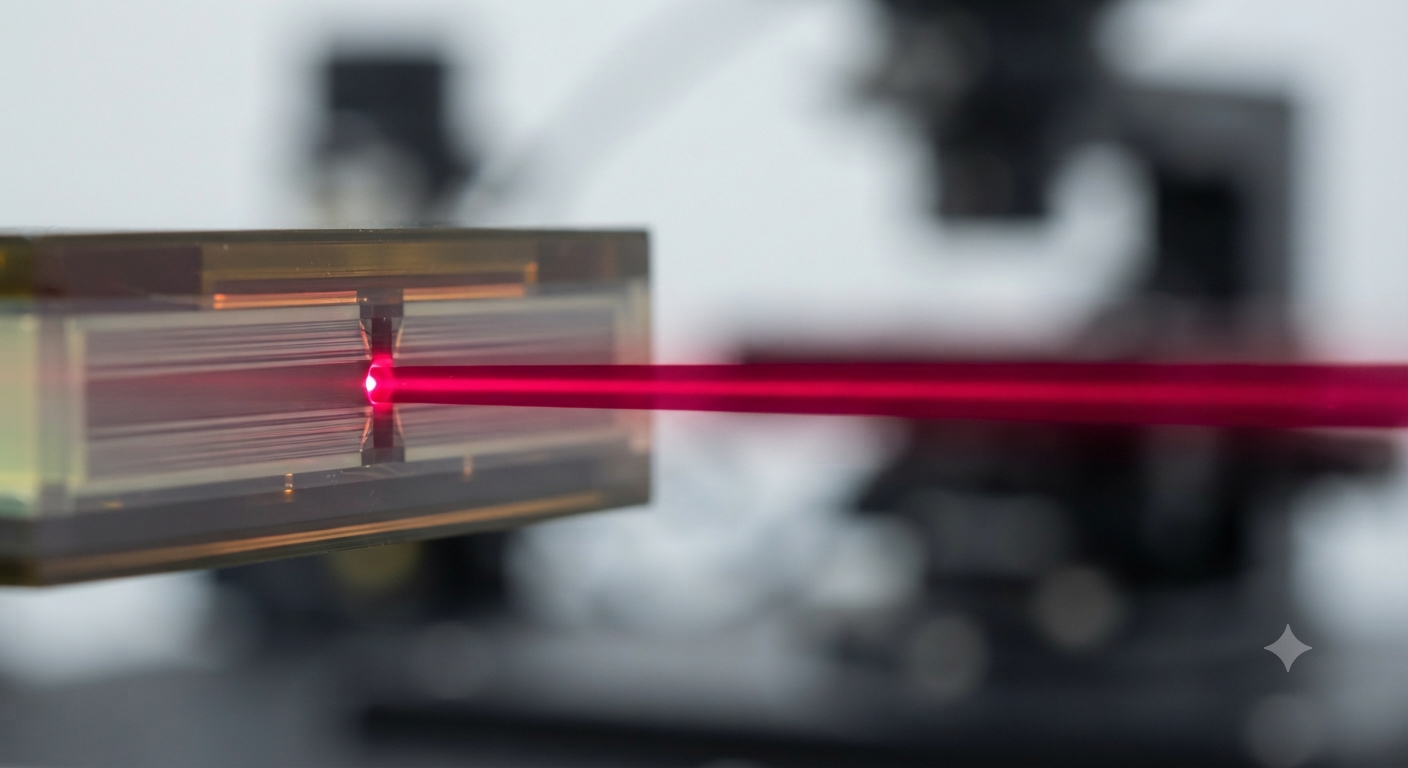
The Rise of Single-Mode VCSELs: Extending Reach and Bandwidth
To conquer the bandwidth bottlenecks associated with modal dispersion, the photonics industry has aggressively developed single-mode VCSEL technology leveraging lidar systems for enhanced precision. By engineering sub-micron oxide apertures that restrict operation to the fundamental transverse mode ($\text{TEM}_{00}$), these devices emit a clean, diffraction-limited Gaussian beam.
Advantages for 400G/800G Architectures
- Elimination of Modal Dispersion: Because a single-mode VCSEL excites only one optical mode, intermodal dispersion is entirely eliminated, allowing for significantly higher data rates over extended link distances.
- Superior Side-Mode Suppression Ratio (SMSR): The high spectral purity reduces chromatic dispersion effects when paired with specific fiber types, enhancing signal-to-noise ratios (SNR).
- Enhanced Coupling to Single-Mode Fiber (SMF): Single-mode variants allow seamless integration with single-mode fiber infrastructure, opening pathways for longer campus-scale data center links without requiring expensive distributed feedback (DFB) edge-emitters.
Engineers seeking robust, low-noise optical amplifiers and laser solutions often integrate specialized components into their test beds. For instance, pairing advanced systems with high-grade Inphenix Semiconductor Optical Amplifiers (SOAs)helps maintain signal strength across complex optical routing topologies.
Direct Comparison: Single-Mode vs. Multimode VCSEL Performance
| Performance Parameter | Multimode VCSEL | Single-Mode VCSEL |
| Aperture Size | Larger (typically 6–10 $\mu\text{m}$) | Sub-micron to small (<3 $\mu\text{m}$) |
| Primary Limitation | Modal dispersion at high speeds | Lower maximum total output power |
| Link Reach (400G/800G) | Typically up to 100 meters (MMF) | Extended reach (hundreds of meters to km) |
| Fiber Compatibility | Multi-Mode Fiber (MMF) | Single-Mode Fiber (SMF) & MMF |
| Cost Profile | Highly cost-optimized for volume | Higher packaging and alignment precision |
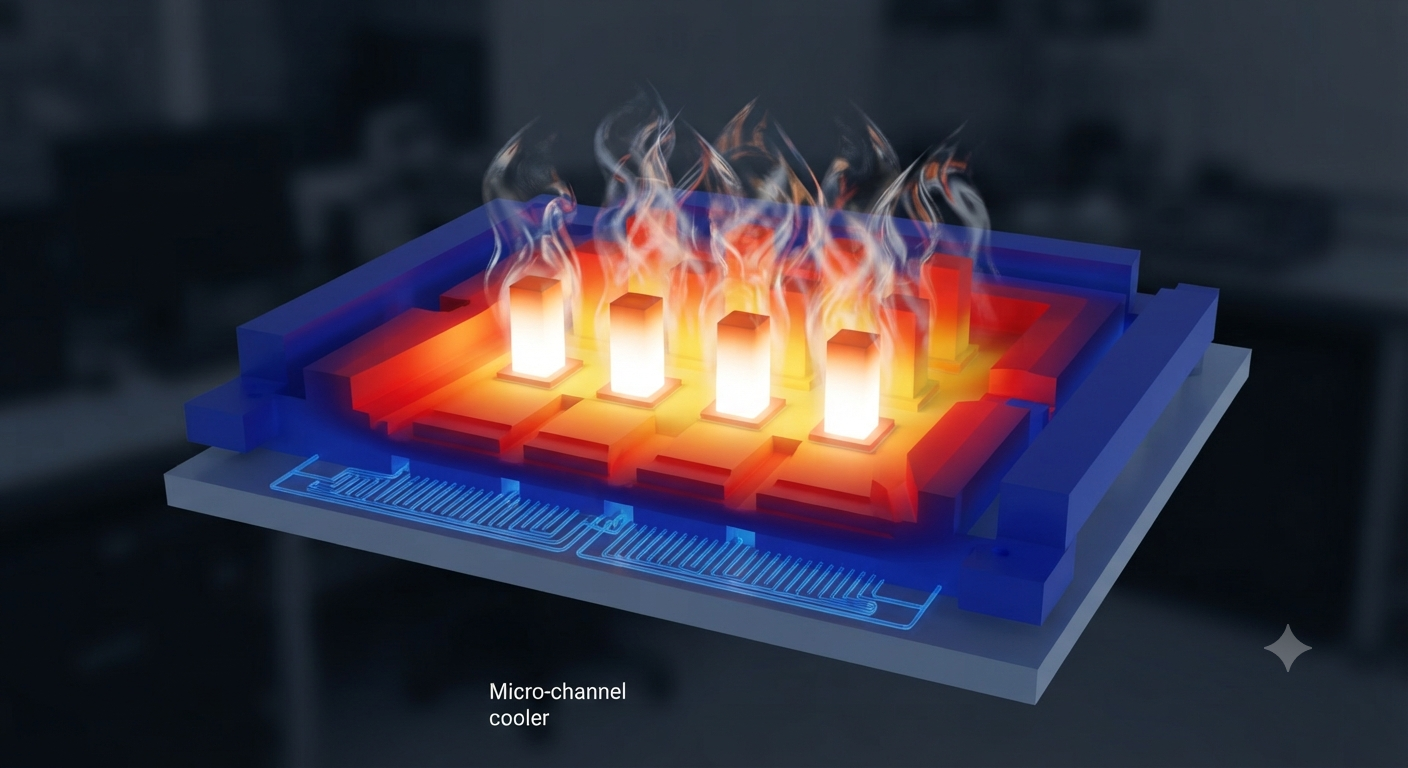
Thermal Management and High-Speed Modulation Challenges
Both single-mode and multimode VCSEL components face severe thermal dynamics inside dense 400G and 800G transceivers. As direct modulation speeds increase to support PAM4 encoding, self-heating effects alter the active region’s refractive index. This thermal shift can lead to thermal rollover, wavelength chirping, and degradation of eye-diagram openings.
Furthermore, managing spectral width is crucial. In applications requiring extreme spectral stability or narrow emission bands—such as specific sensing or coherent test setups—designers frequently utilize Inphenix Distributed Feedback (DFB) Lasersor specialized Inphenix Fabry-Perot (FP) Lasersto complement high-density transceivers.
Application-Driven Selection in 400G/800G Transceivers
The choice between single-mode and multimode VCSEL architectures ultimately depends on the specific topology of the data center network:
- Top-of-Rack and Intra-Row Switching: For short spans under 50 meters linking switches within the same rack, multimode variants remain the preferred choice due to their low cost and mature manufacturing ecosystem.
- Inter-Building and Hyperscale Campus Links: When data center links extend beyond 100 meters, single-mode variants prevent bandwidth collapse caused by modal dispersion, avoiding the need for costly external modulators.
- Co-Packaged Optics (CPO): Next-generation switch architectures integrating optics directly onto the ASIC substrate favor arrayed configurations that offer ultra-low power consumption per gigabit, where thermal efficiency dictates the optimal VCSEL layout.
For specialized biomedical diagnostics, optical coherence tomography (OCT), or test instrumentation requiring broad optical bandwidth rather than discrete laser lines, engineers rely on high-performance Inphenix Superluminescent Diodes (SLDs)to achieve low-coherence, high-resolution imaging capabilities.
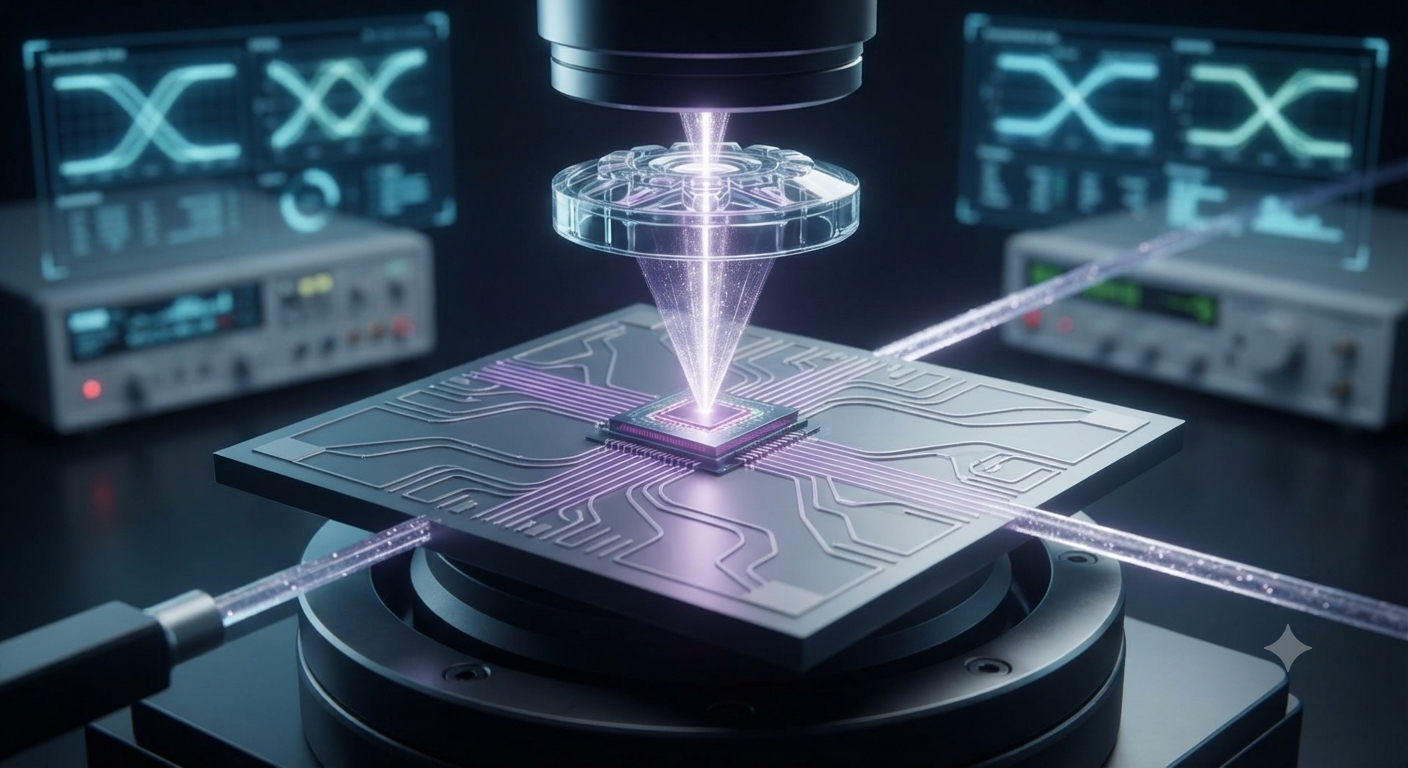
Future Outlook: The Road to 1.6T and Beyond
As IEEE and OIF standardization bodies look toward 1.6T Ethernet and beyond, the demands on optical sources will only intensify. Innovations in oxide confinement layers, high-contrast gratings (HCG), and polarization-controlled single-mode arrays promise to deliver higher modulation bandwidths exceeding 50 GHz per channel.
Balancing cost, yield, and thermal performance will dictate which technology dominates the next decade of hyper-scale networking. Whether leveraging advanced multimode arrays for parallel short-reach optics or deploying single-mode variants for extended reach, understanding the fundamental trade-offs remains essential for optical hardware engineers.
Accelerate Your Optical Designs with Inphenix
Ready to optimize your high-speed transceivers, data center interconnects, or specialized optical sensing platforms? Discover industry-leading reliability and performance with Inphenix Laser Diode Products, featuring advanced Semiconductor Optical Amplifiers (SOAs), Superluminescent Diodes (SLDs), DFB Lasers, and Fabry-Perot Lasers.
Contact the Inphenix Team Todayto request custom component specifications, technical datasheets, or dedicated engineering support tailored to your exact application requirements!